

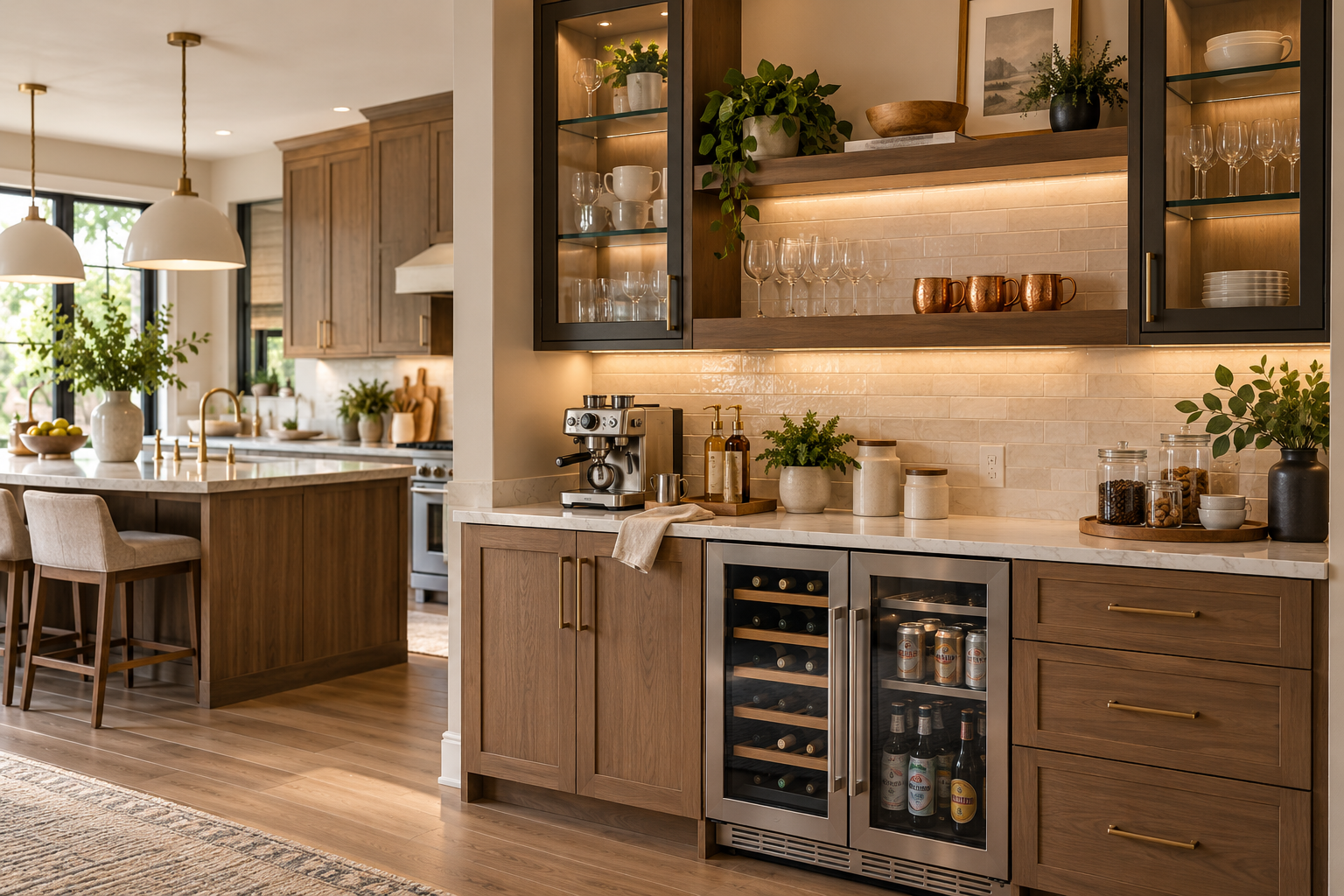
For years, the coffee maker lived wherever there happened to be an open spot on the kitchen counter. Wine bottles went into a cabinet, sparkling water filled the refrigerator, and mugs competed with everyday dishes for storage. In 2026, homeowners are increasingly giving beverages a place of their own.
The kitchen beverage station has moved from a nice extra to a serious design consideration in many remodels. According to the 2026 U.S. Houzz Kitchen Trends Study, 24% of renovating homeowners who add specialty built-in features include a beverage station. That puts beverage stations behind only pantry cabinets among the built-in features tracked in the study. The same research found that 76% of renovating homeowners incorporate specialty built-ins overall.
| 2026 U.S. Houzz Kitchen Trends Study | Share |
| Renovating homeowners who incorporate specialty built-ins | 76% |
| Homeowners adding specialty built-ins who include pantry cabinets | 47% |
| Homeowners adding specialty built-ins who include a beverage station | 24% |
| Wood as the most popular cabinet color | 29% |
| White cabinets | 28% |
The numbers point to a larger change in kitchen planning. Instead of treating the room as one continuous work area, homeowners and designers are creating zones around specific routines: cooking, cleaning, food preparation, baking, storage and beverages.
A well-planned beverage center can make morning coffee easier, reduce congestion during entertaining and keep small appliances from taking over the main prep counter. But the best beverage stations are not simply decorative coffee corners. They are planned around the people who will actually use them.
Why Kitchen Beverage Stations Are Growing in Popularity
The appeal starts with a simple idea: frequently repeated tasks deserve convenient spaces.
Coffee may be made several times each morning. Children may reach for water or juice throughout the day. Guests may want drinks while the host is preparing dinner. When all of those activities happen in the main cooking zone, people repeatedly cross paths.
A beverage station moves one of the kitchen’s busiest routines to a dedicated location.
Houzz’s 2026 research shows how strongly homeowners are prioritizing purpose-built spaces. Pantry cabinets were included by 47% of homeowners adding specialty built-ins, while beverage stations reached 24%. Baking stations, breakfast bars, wine refrigerators and walk-in pantries also appear in the study. Rather than simply asking for more cabinets, homeowners are increasingly asking what each section of cabinetry should accomplish.
This function-first thinking also aligns with broader industry research. National Kitchen & Bath Association trend reporting around 2026 emphasizes better organization, reduced visual clutter and clearer separation between primary and secondary kitchen functions.
What Is a Kitchen Beverage Station?
A kitchen beverage station is a dedicated area for preparing and storing drinks and the items associated with them. Depending on the household, it may function as a coffee bar, tea station, smoothie center, hydration zone, home bar or combination of several uses.
A simple version might include a coffee machine, countertop, mugs and drawers. A more complete beverage center can include an espresso or coffee machine, electric kettle, undercounter beverage refrigerator, small sink, ice maker, water filtration, glassware storage, accessory drawers, task lighting and conveniently positioned electrical outlets.
The key is not the number of features. It is whether everything needed for the routine is stored where the routine happens.
Coffee Bar, Beverage Center or Wet Bar?
Before designing cabinetry, decide what the station needs to do.
Coffee Station
A dedicated coffee station is ideal for households where coffee or tea is part of the daily routine. The most useful designs keep mugs, beans, pods, tea, sweeteners and accessories within arm’s reach of the machine.
A built-in coffee station can be open and visible or concealed behind pocket, retractable or cabinet doors. Concealed designs are particularly useful when homeowners want the convenience of countertop appliances without leaving them visible all day.
All-Day Beverage Center
For families, an all-day beverage center may be more useful than a coffee-only setup. It can combine coffee equipment with refrigerated drinks, reusable bottles, glassware and water.
Locating this area away from the cooktop and primary prep surface allows family members to get a drink without interrupting someone cooking.
Entertaining Bar
Homeowners who entertain regularly may prioritize an undercounter refrigerator, ice, glassware and a small sink. The station can sit near the dining or living area so guests do not need to enter the main kitchen work zone.
| Station Type | Best For | Key Elements |
| Coffee Station | Households where coffee or tea is part of the daily routine | Mugs, beans, pods, tea, sweeteners and accessories within arm’s reach of the machine |
| All-Day Beverage Center | Families | Coffee equipment, refrigerated drinks, reusable bottles, glassware and water |
| Entertaining Bar | Homeowners who entertain regularly | Undercounter refrigerator, ice, glassware and a small sink |
A beverage station can also combine these functions. The best configuration depends on what the household uses every day, not what looks impressive in a photograph.
The Best Place to Put a Beverage Station
Location can determine whether a beverage station becomes indispensable or turns into an expensive cabinet niche.
For most kitchens, the ideal position is accessible but outside the primary cooking path.
Near the refrigerator works well when milk, cream, fruit, juice or chilled beverages are frequently used. It reduces travel between appliances.
At the edge of the kitchen can be even more effective. An end wall or transition between the kitchen and dining area allows family members and guests to access drinks without moving through the main cooking zone.
Inside a pantry keeps appliances and supplies out of sight while preserving the clean appearance of the main kitchen. Before choosing this approach, electrical capacity, ventilation, lighting and appliance clearances should be properly planned.
Along a cabinet wall, a recessed coffee niche can sit between tall cabinetry, with drawers below and storage above. This is useful when a separate pantry or bar area is not available.
Whatever location you choose, avoid positioning the station where an open refrigerator, dishwasher or cabinet door blocks circulation.
How to Design a Beverage Station That Actually Works
A beautiful backsplash cannot compensate for poor planning. Start with workflow.
1. List What You Use Every Day
Design around real habits. A drip-coffee household needs different storage than someone using a large espresso machine. Smoothie drinkers may need access to a blender, refrigerator and ingredients. Tea drinkers may value a kettle, filtered water and organized canisters.
Measure the actual appliances before finalizing cabinetry.
2. Plan Electrical Outlets Early
Coffee machines, grinders, kettles and blenders can quickly increase electrical requirements. Outlets should be accessible without leaving cords stretched across the counter.
For concealed appliance cabinets, work with qualified professionals to address electrical requirements, ventilation, heat and manufacturer-specified clearances.
3. Put Supplies Where They Are Used
Store mugs close to the coffee maker, glasses near chilled beverages and coffee accessories in the drawer directly below the machine.
It sounds obvious, but it is the difference between purpose-built storage and cabinetry that merely looks organized.
4. Protect Enough Working Surface
A beverage station still needs countertop space. Users need room to place a mug, refill a reservoir, pour a drink or set down ingredients.
Do not size the niche around the appliance alone.
5. Think About Water
A sink can make a larger beverage station considerably more convenient, especially for espresso equipment and entertaining. If additional plumbing is impractical, locating the station near the main sink can provide similar convenience without adding another water line.
6. Include Task Lighting
Under-cabinet or integrated lighting improves visibility and gives a beverage nook a finished appearance. It is particularly useful in recessed stations surrounded by tall cabinetry.
Hidden Coffee Stations and Appliance Garages
One of the strongest design directions in 2026 is the combination of convenience and visual calm.
Homeowners want appliances readily available, but they do not necessarily want every appliance visible. That is why coffee stations increasingly overlap with appliance-garage design.
Pocket doors can retract beside the cabinet interior. Lift-up doors can keep the opening clear while the station is being used. Full-height doors can make the entire zone disappear into a cabinetry wall when closed.
This approach works particularly well in open-concept homes, where the kitchen is visible from living and dining areas. Current design coverage also reflects the move toward concealed coffee stations, appliance garages and back-of-house functions that allow the main kitchen to remain visually quieter.
There is an important practical caution: a cabinet designed to hide appliances must also be designed for the appliances to operate safely. Heat, steam, electrical load and ventilation requirements vary. Always follow appliance specifications and applicable building and electrical codes rather than assuming an enclosed cabinet is suitable for operation.
Small-Kitchen Beverage Station Ideas
A beverage center does not require a large kitchen.
In a smaller room, consider converting one section of countertop into a dedicated coffee zone. A narrow cabinet, floating shelf and organized drawer can create a functional station without changing the floor plan.
Other space-efficient options include:
- A recessed niche within tall cabinetry
- A compact station at the end of a cabinet run
- A pantry shelf designed around a coffee machine
- An undercounter beverage refrigerator
- Vertical shelving for mugs and supplies
- A pull-out shelf for occasional-use appliances
The objective is not to add more cabinetry. It is to organize a routine more efficiently within the space already available.
Materials and Finishes: Make the Station Belong to the Kitchen
A beverage station can either blend seamlessly with surrounding cabinetry or become a small design focal point.
For a quiet, integrated look, continue the same cabinet finish and countertop used in the main kitchen. This is especially effective in transitional and minimalist interiors.
For more personality, the smaller footprint creates an opportunity to use a finish that might feel overwhelming across an entire kitchen. Warm wood, a contrasting cabinet color, patterned tile, stone or a distinctive backsplash can define the zone.
Warm woods are particularly relevant in 2026. Houzz reported that wood became the most popular cabinet color among renovating homeowners at 29%, narrowly ahead of white at 28%. This broader return to natural finishes can translate particularly well to coffee nooks and beverage cabinetry.
Glass-front cabinets can work well for attractive glassware, while closed cabinetry is better for supplies that create visual clutter.
Common Beverage Station Mistakes to Avoid
The growing popularity of beverage stations does not mean every design succeeds.
One common mistake is placing the station directly in the main cooking path. This defeats much of the purpose of creating a separate zone.
Another is designing around today’s appliance without considering replacement dimensions. Built-in niches with extremely tight tolerances can create problems when an espresso machine eventually needs to be replaced.
Insufficient countertop depth or height can also make refilling water tanks and opening appliance lids difficult. Other issues include too few outlets, inadequate lighting, no nearby waste bin and storing supplies in unrelated cabinets across the room.
Finally, avoid building an elaborate beverage center simply because it is trending. If your household primarily drinks coffee, a thoughtfully designed coffee cabinet may provide more value than a complex station with features that rarely get used.
Is a Kitchen Beverage Station Worth It?
For the right household, yes—but usefulness matters more than size or price.
A beverage station can reduce countertop clutter, improve circulation, organize frequently used supplies and create a convenient place for both everyday routines and entertaining.
Its growing popularity is supported by current renovation data rather than social-media aesthetics alone: nearly one-quarter of homeowners adding specialty built-ins in Houzz’s 2026 kitchen study selected beverage stations.
The feature is most worthwhile when it solves an existing problem. If the coffee maker crowds the prep counter, guests constantly cross the cooking zone for drinks, or beverage supplies are scattered across several cabinets, a dedicated station can improve the way the kitchen functions every day.
The Bigger 2026 Kitchen Trend: Design Around Daily Life
The rise of the kitchen beverage station tells us something larger about where kitchen design is heading.
Homeowners are not simply asking for larger kitchens or more cabinets. They are asking for spaces that make routines easier. Pantry cabinets organize food storage. Appliance garages control countertop clutter. Prep kitchens move messy work out of view. Beverage stations give coffee, tea and entertaining their own functional home.
That is the real lesson behind this 2026 trend: good kitchen design is becoming more specific.
Before adding any fashionable feature, ask what happens repeatedly in your kitchen and where friction occurs. A beverage station is valuable not because it appears in trend reports, but because, when planned well, it can turn one of the most common daily routines into one of the easiest.
Related Reading
- Kitchen Beverage Stations: How to Design the Perfect Coffee Bar at Home
- Butler’s Pantry vs. Walk-In Pantry: Which Is Better for Your Kitchen?
- Pull-Out Shelves, Lazy Susans & Appliance Garages: The Best Hidden Kitchen Storage Ideas
- Space-Saving Kitchen Cabinet Ideas for Small Homes
Sources
- 2026 U.S. Houzz Kitchen Trends Study
- National Kitchen & Bath Association — 2026 kitchen design trend reporting