
The pantry has evolved beyond being a simple storage area for groceries. In modern Australian homes, it plays an important role in keeping the kitchen organised and functional. A thoughtfully designed pantry can reduce clutter, make meal preparation easier, improve storage efficiency, and contribute to a more enjoyable kitchen experience.
Whether you’re building a new home, renovating your existing kitchen, or planning a forever home, selecting the right pantry layout at the beginning of the design process can make a noticeable difference to your everyday routine. The right setup should complement your available space while matching the way you cook, store food, and use your kitchen.
When comparing butlers pantry vs walk in pantry, it’s important to understand that both options have different strengths. A butler’s pantry can provide additional preparation and entertaining space, while a walk-in pantry focuses more on accessible and organised storage. Knowing how each option works can help you choose a pantry design that suits your home, space, and lifestyle.
What Is a Butler’s Pantry?
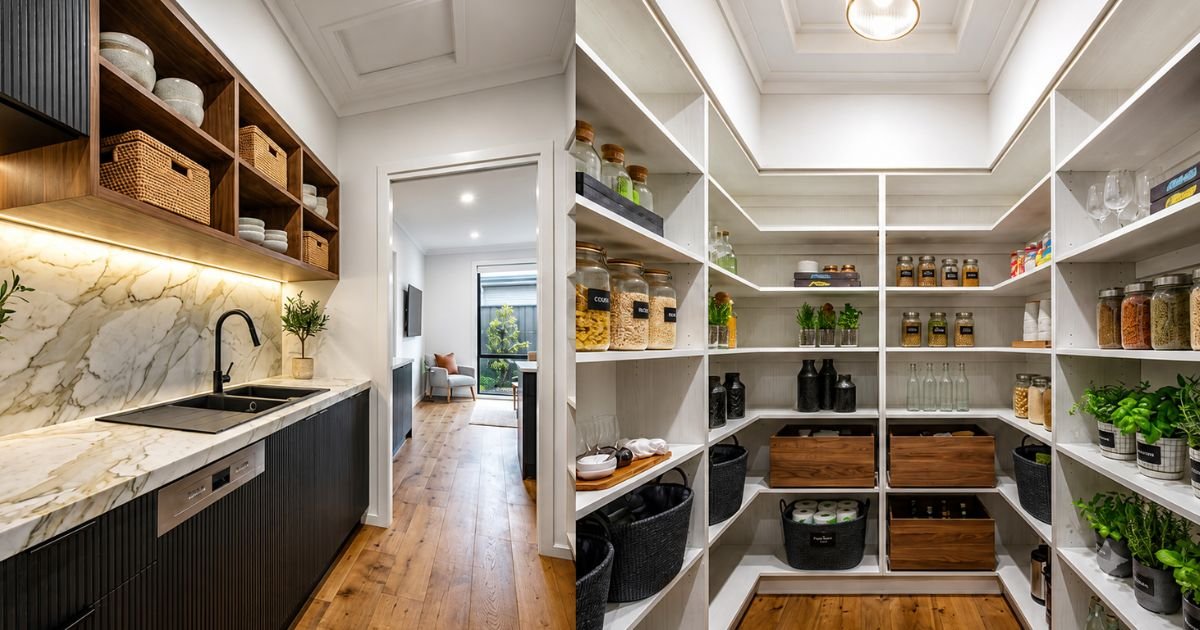
A butler’s pantry is a dedicated area located close to the kitchen, dining room, or entertaining space. It traditionally provides storage and preparation space for serving dishes, glassware, cookware, and food. Modern versions may also include countertops, sinks, cabinets, refrigerators, or beverage stations.
A butler’s pantry can be especially useful for homeowners who frequently entertain. It provides a convenient place to prepare or store items without keeping everything visible in the main kitchen.
Common Features of a Butler’s Pantry
A well-planned butler’s pantry may include:
- Base and wall cabinets
- Countertop workspace
- Open shelving
- Dish and glassware storage
- Small appliances
- Beverage station
- Sink
- Under-counter refrigerator
- Coffee or bar area
- Dedicated serving storage
The layout can be customized according to the available space and the homeowner’s needs.
For homeowners looking for butler’s pantry ideas, combining closed cabinets with open shelving can create both practical storage and an attractive transition between living spaces.
What Is a Walk-In Pantry?
A walk-in pantry is an enclosed storage room designed primarily for organizing food, kitchen supplies, appliances, and other household items. Unlike a cabinet pantry, it provides enough floor space for a person to enter and access shelves from inside.
A walk-in pantry can be designed in many shapes and sizes. Some are compact rooms with shelves on one or two walls, while larger versions can include countertops, appliance storage, drawers, and dedicated zones.
Common Features of a Walk-In Pantry
A functional walk-in pantry may include:
- Adjustable shelving
- Floor-to-ceiling storage
- Pull-out drawers
- Corner shelving
- Appliance storage
- Food containers
- Bulk-item storage
- Countertop workspace
- Baskets and bins
- Dedicated zones for different food categories
The biggest advantage is accessibility. Instead of searching through deep cabinets, homeowners can enter the pantry and see most stored items at once.
Butler’s Pantry vs. Walk-In Pantry: Key Differences
The main difference is functionality. A butler’s pantry typically acts as a combination of storage, preparation, and serving space, while a walk-in pantry primarily focuses on maximizing organized storage. Your choice should depend on how much storage you need and whether you want additional workspace outside the main kitchen.
| Feature | Butler’s Pantry | Walk-In Pantry |
| Primary purpose | Storage, preparation, and serving | Food and household storage |
| Typical location | Between kitchen and dining area | Near or within the kitchen |
| Workspace | Often included | Optional |
| Appliance storage | Common | Common |
| Entertaining | Excellent | Good |
| Storage capacity | Moderate to high | High |
| Privacy | Can conceal kitchen activities | Fully enclosed |
| Space requirement | Moderate to large | Small to large |
| Design flexibility | High | High |
| Best for | Entertainers and multi-purpose kitchens | Storage-focused households |
Which Offers More Storage?
A walk-in pantry generally provides more dedicated storage because the entire room can be organized around shelves, drawers, and cabinets.
However, a large butler’s pantry can also provide substantial storage while offering additional counter space for food preparation and serving.
Which Is More Convenient?
Convenience depends on how you use your kitchen and what you want from your overall kitchen design. If you frequently prepare meals, entertain guests, or need a dedicated place to keep serving items, a butler’s pantry may be the more practical choice. On the other hand, if your priority is storing groceries, appliances, and bulk supplies in one organised area, a walk-in pantry may fit your needs better.
Pros and Cons of a Butler’s Pantry
A butler’s pantry can add functionality and visual separation to an open kitchen. It is particularly useful for homeowners who entertain frequently or want additional preparation and serving space. However, it usually requires more planning, construction, and usable floor area than a simple pantry cabinet.
Butler’s Pantry Pros
1. Dedicated Food Preparation Area: A butler’s pantry gives you extra counter space for preparing meals, arranging dishes, and getting drinks ready. This helps keep the main kitchen cleaner, especially when you’re hosting guests.
2. Convenient Space for Used Dishes: During gatherings, a butler’s pantry can provide a practical place to keep used dishes, glassware, and serving pieces temporarily. If the space has a sink or dishwasher, you can also manage cleaning without disrupting the main kitchen.
3. Helps Minimise Kitchen Noise: When enclosed, a butler’s pantry can help separate noisy appliances such as blenders, coffee machines, and dishwashers from the main living areas. This can make open-plan kitchens feel more comfortable during meal preparation and entertaining.
4. Extra Storage for Kitchen Essentials: A butler’s pantry can take pressure off your main kitchen cabinets by providing additional room for serving ware, seasonal items, utensils, and entertaining essentials. Features such as pull-out shelves and organised cabinets can make these items easier to access while keeping them out of sight.
Butler’s Pantry Cons
1. Requires Dedicated Space: A butler’s pantry needs additional room for cabinets, countertops, and comfortable movement. In smaller homes, creating this space may reduce the area available for a hallway, storage room, or other useful spaces.
2. May Not Suit Every Lifestyle: If you rarely entertain guests or already have enough kitchen storage, a butler’s pantry may not be used frequently. In such cases, the space could potentially serve a more practical purpose elsewhere in the home.
3. Adds Cleaning and Maintenance: Extra countertops, cabinets, appliances, and storage areas also mean more surfaces to clean and maintain. Without a proper organisation system, the pantry can gradually become a place for rarely used items and unnecessary clutter.
4. Higher Installation Costs: Creating a butler’s pantry can increase the overall project budget due to cabinetry, countertops, plumbing, electrical work, lighting, and appliances. The final cost will depend on the size, layout, materials, and features included in the design.
Pros and Cons of a Walk-In Pantry
A walk-in pantry is an excellent option for homeowners who want maximum storage and easy access to groceries and kitchen supplies. It can accommodate shelves, drawers, appliances, and bulk items, but its value depends heavily on organization and layout.
1. Greater Storage Capacity: A walk-in pantry provides plenty of room for shelves, cabinets, and drawers, making it easier to store groceries, kitchen supplies, and bulk purchases. Floor-to-ceiling storage can also help make better use of available wall space.
2. Convenient Appliance Storage: The extra space in a walk-in pantry makes it easier to keep larger or frequently used appliances such as air fryers, blenders, microwaves, and toaster ovens away from the main kitchen counters. This helps create a cleaner and less cluttered kitchen.
3. Better Organisation: With dedicated shelves, drawers, and storage zones, a walk-in pantry makes it easier to arrange items according to how often you use them. Grouping groceries, appliances, beverages, and other essentials into separate areas can also make everyday items quicker to find.
Walk-In Pantry Cons
1. Some Items Can Be Difficult to Reach: A larger pantry gives you more storage, but deep shelves and corners can sometimes make it harder to find items. Without a clear organisation system, products stored at the back may be overlooked or difficult to access.
2. Requires Valuable Floor Space: A walk-in pantry needs dedicated space within or near the kitchen. In smaller homes, allocating this area may reduce the available space for other kitchen features or living areas.
3. More Cleaning and Upkeep: A larger pantry means more shelves, floors, cabinets, and storage surfaces to clean regularly. When groceries are stored in bulk, keeping the area organised and checking for spills or pests also becomes an important part of routine maintenance.
Creative Storage Ideas for Butler’s and Walk-In Pantries
Effective storage is not only about adding more shelves. It is about making every part of the pantry easy to access and useful. Combining adjustable shelving, drawers, vertical storage, and dedicated zones can improve organization while reducing wasted space.
For pantry storage solutions, consider these practical ideas:
- Use adjustable shelves for different container sizes.
- Add pull-out drawers for heavy items.
- Install vertical dividers for trays and cutting boards.
- Use labelled containers for dry ingredients.
- Create separate zones for breakfast foods, baking supplies, snacks, and beverages.
- Store frequently used products between waist and eye level.
- Use corner shelves to avoid dead space.
- Add hooks for lightweight kitchen tools.
- Keep bulk products on lower shelves.
- Use clear containers where visibility is important.
These principles work in both compact and large pantry layouts.
Modern Design Ideas to Improve Pantry Functionality
Modern pantry design focuses on accessibility, organization, lighting, and visual consistency. A pantry should not simply hold products; it should make daily kitchen activities easier.
A few practical ideas include:
Add Task Lighting
LED strip lighting under shelves can make stored products easier to identify, especially in deeper cabinets.
Create Dedicated Zones
Instead of placing products wherever space is available, divide the pantry into functional categories.
For example:
- Baking zone
- Breakfast zone
- Beverage zone
- Snack zone
- Appliance zone
- Bulk storage zone
Use a Combination of Open and Closed Storage
Open shelves make frequently used products easy to reach, while closed cabinets can hide less attractive items and reduce visual clutter.
Make Appliances Accessible
If you regularly use a coffee machine, mixer, toaster, or air fryer, consider creating a dedicated appliance area with a nearby power outlet.
These principles can also be incorporated into butlers pantry design ideas to create a space that combines storage, preparation, and entertaining.
How to Choose Between a Butler’s Pantry and a Walk-In Pantry
The best choice depends on your space, lifestyle, storage needs, and budget. Homeowners who entertain frequently may prefer the multi-purpose nature of a butler’s pantry, while households that prioritize grocery and appliance storage may benefit more from a walk-in pantry.
Ask yourself these questions:
How much storage do you need?
If you buy groceries in bulk or have a large household, a walk-in pantry may provide better capacity.
Do you entertain frequently?
If you host dinners or parties regularly, a butler’s pantry can provide valuable preparation and serving space.
How much space is available?
Measure the available area before choosing a layout. A pantry should improve your kitchen rather than make circulation uncomfortable.
Do you need additional countertops?
If yes, a butler’s pantry may offer more functional workspace.
What is your budget?
Consider not only cabinets but also countertops, lighting, flooring, plumbing, electrical work, and appliances.
Do you prefer hidden storage?
Both options can hide clutter, but a walk-in pantry provides a completely enclosed storage environment.
Alternative Storage Options for Your Kitchen
Not every kitchen has enough space for a dedicated walk-in or butler’s pantry. Fortunately, several alternatives can provide additional storage without requiring a separate room.
Pantry Cabinets
Tall pantry cabinets can provide significant storage while using vertical space efficiently.
Pull-Out Pantry Units
Narrow pull-out systems are useful for small kitchens and can fit into spaces that would otherwise remain unused.
Appliance Garages
These are useful for keeping frequently used appliances accessible but visually hidden.
Open Shelving
Open shelves can provide affordable and accessible storage, although they require more attention to organization.
Built-In Storage
Custom cabinetry can be designed around unusual corners, walls, and unused areas.
These approaches can also contribute to effective kitchen storage solutions when a full pantry is not practical.
How to Design a Customized Pantry for Your Home
A successful pantry design should begin with your daily habits rather than aesthetics alone. Before selecting cabinets or shelves, identify what you store, how often you use it, and how much space each category requires.
Assess Your Storage Needs
Make a list of groceries, appliances, cookware, beverages, and other items you want to store.
Measure the Available Space
Record wall dimensions, ceiling height, door clearance, windows, electrical points, and plumbing locations.
Plan Storage Zones
Group similar items together so everything has a logical location.
Select Appropriate Shelving
Use adjustable shelves where possible. This allows the storage system to adapt as your needs change.
Plan Lighting
Make sure every shelf and work area receives sufficient illumination.
Consider Accessibility
Frequently used products should be easy to reach. Avoid creating deep or inaccessible storage areas.
Final Thoughts
The choice between a butlers pantry vs walk in pantry ultimately depends on your kitchen layout, storage requirements, lifestyle, and budget. A butler’s pantry is a strong option for homeowners who want additional preparation and entertaining space, while a walk-in pantry is ideal for maximizing organized storage.
Before making a decision, consider what you actually need to store, how frequently you entertain, and how much space your kitchen can comfortably provide. With thoughtful planning, either option can improve organization, reduce clutter, and make everyday kitchen activities more convenient.
For homeowners who want expert guidance with kitchen planning and design, KBR can help turn your storage requirements into a practical and customized kitchen solution.
Frequently Asked Questions
1. What is the main difference between a butler’s pantry and a walk-in pantry?
A butler’s pantry typically combines storage with preparation and serving functions, while a walk-in pantry primarily provides enclosed storage for food, appliances, and kitchen supplies.
2. Is a walk-in pantry better than a butler’s pantry?
There is no single best option for every home. A walk-in pantry may be better for households that prioritize storage capacity, while a butler’s pantry can be more useful for entertaining and food preparation.
3. Can a butler’s pantry include a sink?
Yes. Depending on the layout and plumbing requirements, a butler’s pantry can include a sink, countertop, dishwasher, refrigerator, or other appliances.
4. How much space does a walk-in pantry need?
The required space depends on the layout and storage goals. Even a compact walk-in pantry can work effectively when shelving and circulation are planned carefully.
5. Are walk-in pantries suitable for small kitchens?
Yes. Small walk in pantry ideas can include narrow layouts, vertical shelving, pull-out storage, and compact appliance zones. The key is using available space efficiently.