

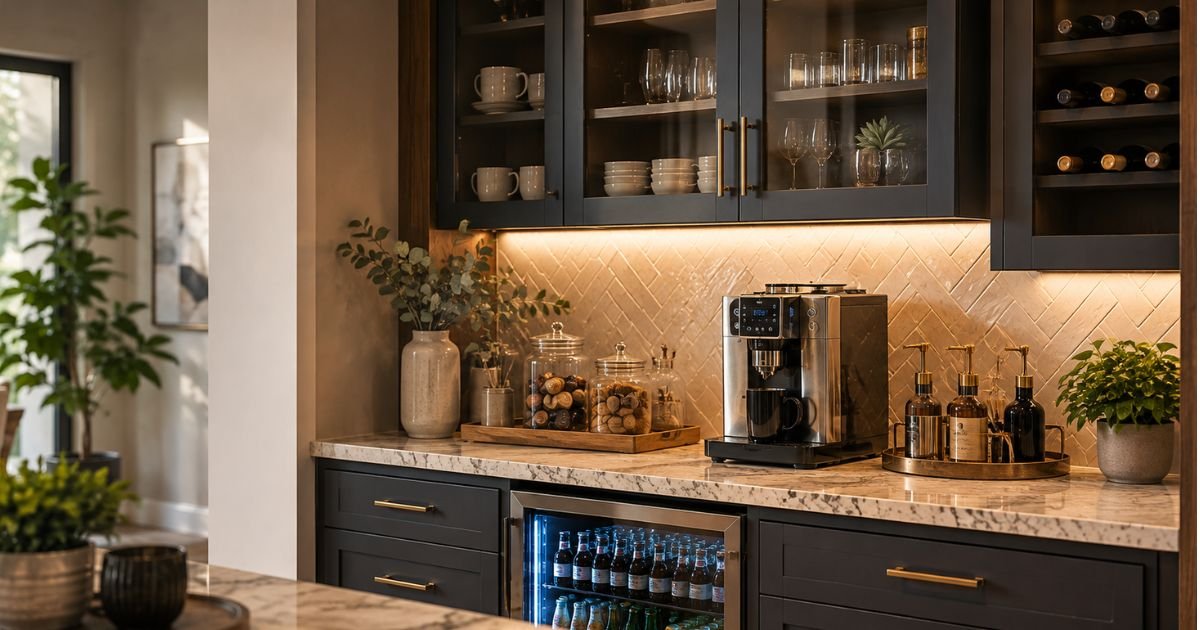
A well-designed kitchen beverage station can turn an unused corner of the kitchen into a convenient space for coffee, tea, drinks, and everyday entertaining. Instead of keeping coffee makers, mugs, syrups, and supplies scattered across the countertop, a dedicated station gives everything a defined place.
The right design depends on your kitchen layout, available space, beverage habits, storage requirements, and overall style. Some homeowners prefer a compact counter setup, while others want a custom cabinet with appliances and concealed storage.
This guide explains how to create a practical and attractive beverage area, whether you are planning a kitchen renovation or making a few simple upgrades.
What Is a Kitchen Beverage Station?
A kitchen beverage station is a dedicated area designed for preparing, storing, and serving drinks such as coffee, tea, water, smoothies, or cocktails. It typically combines countertop workspace with appliances, storage, and easy access to drinkware and supplies.
Unlike a regular kitchen counter, a beverage station is organized specifically around beverage preparation. It can be a small corner, a section of cabinetry, a pantry area, or a fully customized built-in feature.
Depending on your needs, it may include:
- Coffee or espresso equipment
- Tea storage
- Mugs and glasses
- Syrups and sweeteners
- Refrigerator or beverage cooler
- Sink
- Open shelving
- Drawers and cabinets
Why Add a Coffee Bar to Your Kitchen?
A dedicated coffee area keeps frequently used equipment and supplies together, making morning routines easier and reducing countertop clutter. It can also give the kitchen a more personalized and welcoming feature.
A coffee station can be particularly useful for households where several people prepare drinks throughout the day. It also creates a convenient self-service area when entertaining guests.
A well-planned station can provide:
- Better organization
- Easier access to coffee supplies
- Dedicated appliance space
- Additional kitchen storage
- A decorative focal point
- Convenient drink preparation
How to Choose the Right Spot for a Home Coffee Bar
The best location for a beverage area should provide enough workspace, storage, electrical access, and convenient movement around the kitchen. It should also fit naturally into the way you use the room.
A home coffee station can work well near the breakfast area, pantry, refrigerator, or dining space. If you entertain frequently, placing it away from the main cooking zone can prevent guests from getting in the way of meal preparation.
Before choosing a location, consider:
- Available countertop width and depth
- Nearby electrical outlets
- Storage requirements
- Plumbing needs if a sink is included
- Distance from the refrigerator
- Traffic flow through the kitchen
- Access to mugs and drink ingredients
Essential Features of a Kitchen Beverage Station
The most useful beverage stations combine preparation space with storage. You do not need every possible feature; choose components based on what you actually use.
Coffee Maker and Brewing Equipment
Choose equipment based on your preferred brewing method. A basic drip coffee maker requires less space than a large espresso setup, while grinders, kettles, and other accessories may require additional countertop room.
When choosing a coffee maker, consider appliance dimensions, cleaning requirements, controls, water access, and how often you will use the equipment.
Storage for Coffee, Tea, and Supplies
Use drawers, cabinets, or shelves to store coffee beans, tea bags, filters, sweeteners, syrups, and other supplies.
Pull-out drawers can make smaller items easier to find, while deeper cabinets can accommodate larger appliances.
Countertop Space
Leave enough counter space beside the coffee maker for preparing drinks. A cramped station can quickly become inconvenient.
If possible, include space for a grinder, kettle, mugs, and a small tray for frequently used ingredients.
Mugs and Glassware Storage
Mugs should be stored close to the preparation area. Open shelving can make attractive mugs part of the kitchen design, while closed cabinets create a cleaner appearance.
Hooks beneath shelves can also provide an efficient solution when countertop and cabinet space are limited.
10 Coffee Bar Ideas for Different Kitchen Styles
There is no single design that works for every kitchen. Consider these options:
- Modern minimalist bar: Clean cabinetry, simple hardware, and concealed appliances.
- Open-shelf coffee station: Shelves display mugs, jars, and coffee accessories.
- Traditional cabinet station: Wood cabinetry creates a classic appearance.
- Hidden appliance station: Pocket doors conceal equipment when not in use.
- Breakfast nook station: A small setup near the dining area makes morning drinks convenient.
- Pantry coffee bar: A dedicated pantry section keeps appliances away from the main counter.
- Luxury beverage centre: Add premium appliances, speciality storage, and a beverage refrigerator.
- Industrial-style station: Combine metal accents, open shelving, and textured finishes.
- Scandinavian-inspired station: Use light finishes and simple organization.
- Colour-focused coffee corner: Use a contrasting cabinet or backsplash to create a focal point.
Small Kitchen Coffee Bar Ideas
Small kitchens can still accommodate a functional beverage area. The key is to use vertical space and keep only frequently used equipment on the counter.
Consider wall-mounted shelves, narrow cabinets, pull-out drawers, compact appliances, and hooks for mugs.
Some practical DIY coffee bar ideas include converting a small unused counter section, adding floating shelves, using a rolling cart, or installing a narrow cabinet with dedicated storage.
Built-In vs. Freestanding Coffee Stations
A built in coffee station cabinet provides a more integrated appearance and can be customized to match the surrounding kitchen cabinetry. It can also conceal appliances and provide dedicated electrical and storage solutions.
Freestanding stations are generally more flexible. A cart, console, or small cabinet can be moved or replaced without changing the kitchen cabinetry.
| Feature | Built-In | Freestanding |
| Appearance | Integrated | Flexible |
| Customization | High | Moderate |
| Mobility | Low | High |
| Storage | Can be substantial | Depends on furniture |
| Renovation required | Usually more | Usually less |
| Best for | Permanent designs | Flexible setups |
How to Organize Your Home Coffee Bar
Good organization makes the station faster and easier to use. Keep everyday items within reach and move less frequently used supplies into lower or less accessible storage.
Group items according to how they are used. For example, coffee beans and filters can stay near the coffee maker, while backup supplies can be stored in a nearby cabinet.
A simple organization system could include:
- Daily zone: Coffee maker, mugs, favourite coffee, and frequently used tools
- Preparation zone: Grinder, kettle, filters, and measuring accessories
- Storage zone: Extra coffee, tea, syrups, and supplies
- Serving zone: Glasses, spoons, trays, and napkins
Best Materials and Finishes for a Beverage Station
Choose materials that can handle frequent spills, heat, cleaning, and everyday use. Countertops should be durable and easy to wipe clean.
Quartz, stone, solid-surface materials, and properly finished wood can work depending on the kitchen design and maintenance preferences.
For cabinetry, select finishes that complement the surrounding kitchen. A contrasting backsplash or cabinet colour can help distinguish the beverage area without making it look disconnected.
Lighting Ideas for a Kitchen Coffee Bar
Good lighting improves both functionality and atmosphere. The preparation area should be bright enough to make measuring, brewing, and cleaning easy.
Under-cabinet lighting is particularly useful for countertop stations. Pendant lighting can work well for larger beverage areas, while warm accent lighting can create a comfortable coffee-shop atmosphere.
Consider combining:
- Under-cabinet lighting
- Recessed lighting
- Pendant lights
- Shelf lighting
- Decorative accent lighting
Common Coffee Bar Design Mistakes to Avoid
A beautiful beverage station can still become frustrating if the layout is not practical.
Avoid these common mistakes:
- Not providing enough countertop workspace
- Placing the station too far from necessary supplies
- Forgetting electrical outlets
- Overcrowding the counter with appliances
- Creating storage that is difficult to access
- Ignoring cleaning and maintenance
- Choosing finishes that are difficult to maintain
Always plan the station around your actual routine rather than copying a design simply because it looks attractive in a photograph.
How Much Does a Home Coffee Bar Cost?
The cost depends heavily on the size, materials, appliances, cabinetry, plumbing, and level of customization. A simple countertop setup can be relatively inexpensive, while a fully integrated beverage center can become a significant part of a kitchen renovation budget.
| Coffee Bar Type | Typical Investment Level |
| Simple countertop setup | Low |
| Coffee cart or freestanding cabinet | Low–Moderate |
| Custom cabinetry | Moderate |
| Built-in beverage centre | Moderate–High |
| Luxury beverage station | High |
The best approach is to establish your budget before choosing appliances and finishes. This prevents expensive features from taking priority over the elements you actually need.
Conclusion
A well-planned kitchen beverage station can make daily routines more convenient while adding personality and function to the kitchen. The best design balances countertop space, appliance placement, storage, lighting, materials, and the way your household actually prepares and serves drinks.
You do not need a huge kitchen to create an attractive beverage area. Even a small section of cabinetry or countertop can become a practical home coffee bar when it is organized thoughtfully.
If you are planning a kitchen renovation or custom beverage area, KBR can help you explore practical design ideas that balance style, storage, and everyday functionality.
Visit Us:- https://kitchenandbathresources.com/
FAQs
What is the ideal location for a kitchen beverage station?
A convenient location is usually near the refrigerator, pantry, dining area, or breakfast space. The exact position should depend on kitchen traffic, electrical access, and your daily routine.
How much counter space does a coffee bar need?
There is no universal size. A compact station can work with limited space, while larger setups need additional room for grinders, kettles, espresso machines, mugs, and preparation.
Can I create a coffee station in a small kitchen?
Yes. Wall shelves, narrow cabinets, rolling carts, and compact appliances can create an effective beverage area without requiring a large footprint.
Are built-in coffee stations worth it?
They can be worthwhile for homeowners who want a permanent, integrated design with dedicated storage and concealed appliances. Freestanding options may be better for renters or homeowners who want flexibility.
What should I store in a coffee station?
Common items include coffee beans, tea, filters, mugs, glasses, sweeteners, syrups, spoons, kettles, grinders, and other brewing accessories.