

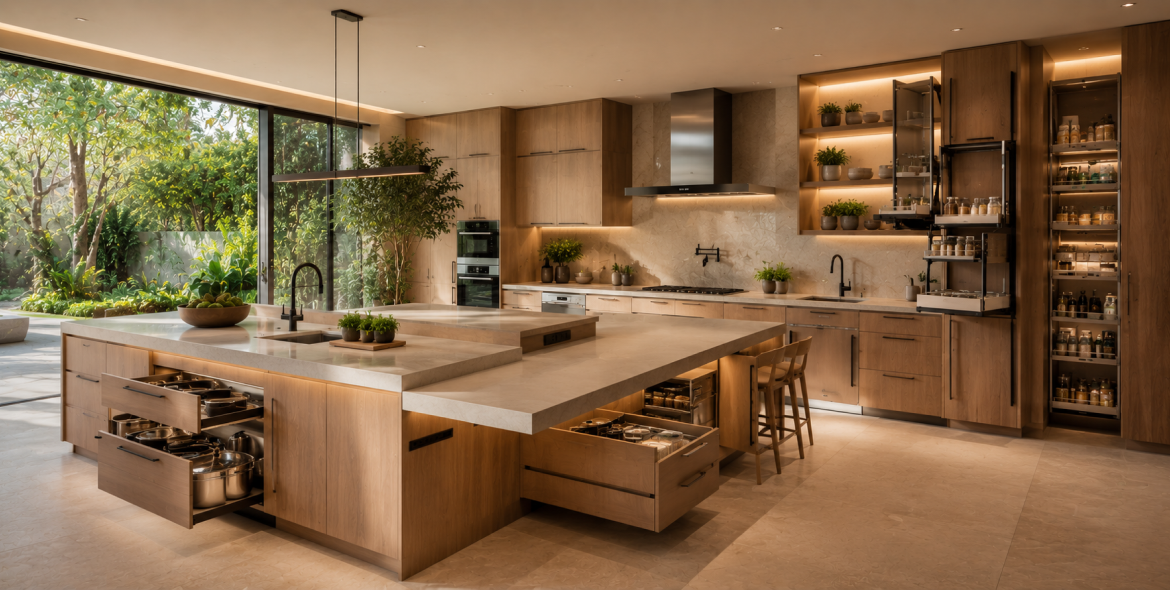
Modern kitchens exist today as spaces that serve practical functions beyond their visual design. Homeowners now prioritize comfort, efficiency, safety, and accessibility when planning renovations, making ergonomic kitchen design an essential part of modern interiors. The kitchen design achieves its purpose through its ability to decrease unnecessary movement, enhance work processes, and accommodate individuals with diverse age and physical capability needs.
The implementation of intelligent storage solutions, expanded walking areas, and height-adjustable work surfaces creates improved operational efficiency in work environments. Homeowners now create kitchen designs which use kitchen ergonomics principles to provide their family members with practical and comfortable kitchen spaces because of changing modern living patterns.
What Is Kitchen Ergonomics?
Kitchen ergonomics studies how kitchen designs can enhance user comfort while decreasing physical labor needs and enabling smooth movement through their daily work tasks. The ergonomic design process includes aesthetic factors but prioritizes user interactions with appliances, countertops, cabinets and cooking areas as its main focus.
The design of an ergonomic kitchen enables people to cook without experiencing excessive bending, uncomfortable reaching and walking inefficiencies and fatigue. The National Kitchen and Bath Association NKBA now considers accessibility and functionality as essential requirements for modern kitchen design projects.
Source: NKBA Kitchen Planning Guidelines
Ergonomic Kitchen Design Improves Everyday Efficiency
A successful ergonomic kitchen design focuses on creating smooth workflows while minimizing unnecessary movement. The kitchen’s daily comfort level depends on where designers choose to put appliances, storage spaces, and preparation areas.
The designer must design the kitchen layout to provide easy access to frequently used items while storing heavy cookware between waist height and waist height. The designer must ensure that countertop heights match the user’s preferred comfort level.
Homeowners today choose kitchen designs which enhance their work efficiency while maintaining their visual appeal. The design of ergonomic kitchens now includes open layouts together with organized storage systems and cabinetry systems which provide convenient access.
The Kitchen Work Triangle Still Matters
The kitchen work triangle serves as the main design principle which guides ergonomic kitchen work. This principle focuses on creating efficient distances between the three primary kitchen zones: kitchen, dining area, and pantry.
- Sink
- Refrigerator
- Cooking area
The goal is to reduce unnecessary walking while maintaining comfortable movement throughout the kitchen. A poorly designed work triangle creates cooking space problems which lead to tiring and unproductive cooking experiences.
The work triangle design still serves as an essential element for driving kitchen productivity in contemporary kitchens which now feature islands and multiple functional design elements.
Designers often recommend that kitchens balance between accessibility and an open layout to make a kitchen both visually appealing as well as practical.
Accessible Kitchen Design Supports All Ages
Modern homeowners now understand that accessible kitchen design brings value to their homes because it meets the needs of their multigenerational households and aging-in-place renovations.
Accessible kitchens often include:
- Wider walkways
- Lower countertop sections
- Pull-out shelving systems
- Easy-grip cabinet handles
- Slip-resistant flooring
These features ameliorate the life of the cripples, as well, offering a far more comfortable environment to live in for everyone.
Accessible design now extends beyond its previous role as a specialized requirement for implementation. Homeowners today prefer design layouts which provide universal accessibility and maintain safety throughout extended usage.
Universal Kitchen Design Is Growing in Popularity
The demand for universal kitchen design has been rising because homeowners want kitchens which maintain their operational capacity throughout all life stages and for all physical disabilities. The design method establishes safe and adaptable environments which provide all users with comfortable access to their spaces without needing any future design changes.
Modern kitchens nowfeature touchless faucets and soft-close drawers together with adjustable lighting, multi-height countertops and easy-access storage systems as standard design elements.
Center for Universal Design has stated that inclusive housing design is becoming more important as homeowners start to think about long-term usability and convenience.
Source: Center for Universal Design
ADA Compliant Kitchen Features Improve Accessibility
An ADA compliant kitchen follows accessibility guidelines established under the Americans with Disabilities Act (ADA). The design of these kitchens specifically targets better mobility and improved reachability and enables users to perform tasks independently.
Important ADA kitchen considerations include:
- Wheelchair-accessible pathways
- Lower sink and countertop heights
- Accessible appliance controls
- Knee clearance beneath workspaces
- Lever-style handles instead of knobs
In practice, most homeowners, regardless of disabilities, implement ADA-compatible features in their dwellings, as they render life much easier and more convenient on a daily basis.
The growing awareness of inclusive design principles has resulted in ADA-based planning becoming a dominant force that shapes kitchen remodeling trends throughout the United States.
Kitchen Layout Ideas That Improve Comfort
The kitchen layout ideas practical layout solutions which provide ergonomic benefits for users. The appropriate kitchen design enables better movement patterns which decrease bodily stress during cooking and cleaning activities.
Popular ergonomic layouts include:
- U-shaped kitchens for workflow efficiency
- Galley kitchens for compact functionality
- L-shaped layouts with open movement space
- Island kitchens with integrated seating and storage
Modern homeowners tend to prefer enhanced layouts that can accommodate multiple people working in the kitchen.
Good layout planning helps to maximize organization, increase safety, and let a kitchen breathe during those busier hours.
Storage Design Is Essential for Ergonomics
The way a kitchen space stores its items directly affects how comfortable users can move throughout the kitchen ergonomics because improperly placed cabinets and shelves create extra physical demands for users who need to bend, stretch and lift items. Modern ergonomic storage solutions include pull-out pantry systems, deep cookware drawers, corner organizers, and soft-close mechanisms that improve accessibility and convenience.
The kitchen requires users to access its essential tools through straightforward methods which do not require them to bend. The organized storage system helps to create a clean kitchen space which enhances productivity while decreasing clutter and especially benefits areas that need efficient storage solutions.
Lighting Also Affects Kitchen Ergonomics
Lighting serves as a vital element which designers use to create comfortable kitchen spaces. The presence of insufficient lighting conditions leads to two problems because it causes eye strain and decreases visibility while making food preparation tasks harder to accomplish.
The popularity of layered lighting systems continues to rise because they provide better functional performance and create improved atmospheric conditions. The combination of task lighting under cabinets and pendant lights above islands and natural light in work areas creates an atmosphere that enhances usability.
A good lighting plan may also contribute to the safety of a kitchen area, as it reduces or eliminates shadows near the cooking and prep zones.
The Future of Ergonomic Kitchens
Ergonomic kitchens are probably going to be much more popular in future renovations as homeowners continue to focus on wellness and accessibility.
Emerging trends include:
- Smart height-adjustable countertops
- Voice-controlled appliances
- Touchless storage systems
- Advanced accessibility technologies
- Sustainable ergonomic materials
Expecting technology and inclusive design to synergize, in terms of evolution, are supposed to foster kitchens where the residents feel habitat that is more efficient, adaptable, and user-friendly.
The new trend in designing the modern kitchen for the convenience of the user is becoming less about decorating style, and more about useful functionality.
Final Thoughts
Homeowners today understand better how kitchen ergonomics make their living spaces more comfortable and efficient. Ergonomic design improves usability and long-term usability through its development of smarter storage systems and superior workflow management solutions.
The combination of kitchen work triangle design together with practical kitchen layout ideas and user-friendly storage facilities creates kitchens which decrease physical workload while enhancing their operational use.
At the same time, accessible kitchen design, universal kitchen design and ADA compliant kitchen principles all help to create safe, flexible and inclusive environments which have become popular in mainstream renovations.
The increasing demand for wellness-oriented interior design and advanced living spaces has made ergonomic kitchen design essential for building kitchens that meet contemporary lifestyle requirements.
Visit Us:- https://kitchenandbathresources.com/