

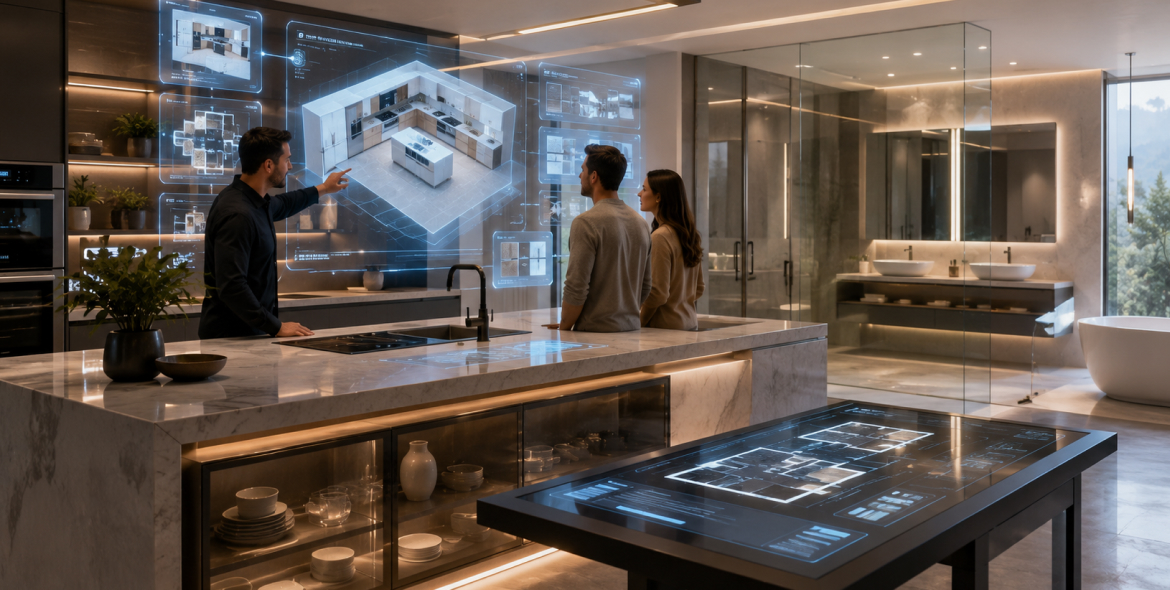
Architectural design of kitchens and bathrooms will undergo a fundamental transformation during the year 2027. Artificial Intelligence (AI) has developed into a fundamental component that designers use to create their entire design process. The entire process of home renovation now experiences transformation through AI technology, which impacts space planning, material selection, and smart appliance integration.
Homeowners and designers, together with builders, must learn AI kitchen design 2027, which has become essential to their work. The project affects multiple factors, which include cost efficiency and design quality, sustainability, and long-term usability. The process, which used to take weeks for planning and manual changes, now requires only hours to complete with improved accuracy.
The Rise of AI in Kitchen and Bath Design
The design process has undergone a major transformation because artificial intelligence now stands at the center of design work that previously depended on human planning skills and unpredictable design methods. The current advanced algorithms possess the ability to evaluate spatial dimensions together with user behavior patterns and personal lifestyle choices in order to produce efficient room designs within a few seconds.
The current development of smart kitchen design trends creates a distinctive period that combines practical features with visual appeal. Homeowners can use AI-powered tools to see several design options at once instead of needing weeks for planning updates.
In bathroom design, AI is also being used to improve space utilization, lighting placement, and selection of fixtures based on real-time data and user behaviors.
AI-Powered Kitchen Layout Optimization
The main benefit of artificial intelligence for residential design work comes from its ability to create intelligent space layouts. The artificial intelligence tools assess kitchen space through their analysis of dimensions and movement patterns, and appliance locations to produce optimal design solutions.
Space optimization practices prove their value particularly in contemporary residential environments because these spaces require maximum efficiency. The artificial intelligence system establishes optimal positions for all cooking spaces, storage compartments, and cleaning areas.
With modern kitchen tech AI tools, designers function to create virtual dining environments that enable them to observe how users operate within dining spaces. This results in kitchens that achieve both aesthetic beauty and functional design through their ergonomic solutions.
Personalized Design Through AI Learning
The main strength of artificial intelligence systems lies in their capability to learn how users behave. The artificial intelligence systems develop an understanding of cooking habits through their learning of storage preferences and appliance usage patterns.
The system provides highly specific design recommendations for AI kitchen design 2027, which personalizes every design element according to user requirements.
For example:
- A cook wants a large counter layer as they are frequently in a rush, preparing meals.
- Some cooks might find it useful to have a small, space-saving design.
- Families are availing upgraded storage solutions
- The high-end user may receive suggestions for a premium material option
This kind of customization was not feasible in traditional design systems.
Smart Material Selection and Cost Optimization
Artificial intelligence is transforming the process of selecting materials that builders use to construct kitchens and bathrooms. AI systems now provide material suggestions that users can evaluate based on three criteria: durability, budget, and style preferences.
The kitchen renovation technology decision-making process is enhanced through this improvement, which helps designers choose between aesthetic design elements and cost-efficient solutions.
AI can forecast the future maintenance expenses of quartz, granite, and engineered surfaces through its predictive capabilities. The system assists homeowners in making better financial choices during their home renovation planning process.
The first sentence states that artificial intelligence has evolved into an essential instrument used to control home renovation AI trends because it enables architects to maintain design standards while monitoring project expenses.
AI in Bathroom Design: Smarter and More Efficient Spaces
Bathroom facilities now incorporate artificial intelligence technology to create smarter spaces. The systems use space limitations together with user patterns analysis to enhance both user comfort and operational efficiency.
This is an area of current development within the area of AI bathroom design trends, in which automation is influenced by sustainability.
AI improvements in bathrooms include:
- A smart lighting application that automatically adjusts based on the time of use.
- Fixture recommendations for water efficiency
- Ventilation controllers for optimized ventilation systems
- Space-conservation themes for layout
- The section provides recommendations for controlling both temperature and humidity levels
They help to create sustainably modern bathrooms, which ease functionality with the prevailing level of comfort.
AI vs Traditional Kitchen & Bath Design
Traditional design methods and AI-based design methods create a major distinction between their approaches. The process becomes better because AI technology enhances speed and accuracy while providing customized solutions.
| Feature | Traditional Design | AI-Based Design 2027 |
| Planning Time | Weeks | Hours |
| Accuracy | Moderate | High |
| Customization | Limited | Highly Personalized |
| Cost Estimation | Approximate | AI Predictive |
| Visualization | 2D Drawings | Real-time 3D Models |
| Efficiency | Lower | High |
This points out why the home renovation AI trends are rapidly replacing the old methods.
AI and Smart Appliance Integration
The design process experience undergoes transformation through artificial intelligence, which also changes kitchen appliance operation. The current generation of kitchen appliances exists as connected devices that possess advanced intelligent features.
Modern kitchen tech AI tools enable kitchen appliances to communicate with one another while they manage their operational efficiency through automatic processes.
Smart appliance capabilities include:
- The system generates recipe suggestions that use the ingredients that users currently have.
- The system adjusts cooking time through its automatic adjustment feature.
- The process of monitoring energy consumption needs to be done continuously throughout the day.
- Including giving live updates while managing maintenance alerts
- Synchronizing with mobile apps
Ease and expense of kitchen operation are further seen in this integration from the Computer Vision Community.
Energy Efficiency and Sustainable Design
The year 2027 establishes sustainability as its primary goal, which artificial intelligence helps to achieve. AI achieves waste reduction and operational efficiency improvements through its analysis of consumption patterns in kitchen and bathroom environments.
This substantiated the emergence of home renovation AI trends towards healthy living.
AI-driven sustainability improvements:
- Reduced water consumption through intelligent devices.
- Suggestions toward Efficient Lighting and Appliance Use
- Waste reduction in material planning
- Eco-friendly design suggestions
- Long-term energy savings optimization
Helping homeowners build greener and more cost-effective homes with such utilities.
AI in Budget Planning and Cost Control
Artificial intelligence serves its most valuable purpose through its ability to estimate expenses. The conventional budgeting method results in unplanned costs, but artificial intelligence now provides better cost predictions for renovation projects.
AI’s main objective is a prototype capable of forecasting the appropriateness of material cost forecasts, labor cost, and complexity of design.
This technology enables homeowners to effectively control their renovation costs while achieving better financial results for their kitchen remodeling projects. Designers use this method to present design options that achieve cost reductions without compromising product quality.
Faster Decision-Making and Reduced Design Time
When we had to go through that process, which led to approval, on more than one occasion, it took a few weeks. Now that it is done by AI in a few hours only.
Homeowners use instant visualization together with automated suggestions to create their final layouts and material choices. The system enables AI kitchen design 2027 execution, which delivers upgraded efficiency for user convenience during renovation work.
The Future of Kitchen and Bath Design with AI
As artificial intelligence technology continues to advance, it will develop more sophisticated applications for residential design work. Future systems will not only assist but actively manage entire design processes.
We can expect:
- Fully automated kitchen planning systems
- Predictive bathroom environment adjustments
- AI-driven construction monitoring
- Fully adaptive smart homes
- Deep integration with lifestyle data
The smart kitchen design trends will receive additional support from these developments, which will create homes that operate with greater intelligence and responsiveness.
Final Thoughts
The year 2027 sees artificial intelligence technology transforming all aspects of kitchen and bathroom design. All design processes now proceed through three stages, which include layout optimization, material selection, and budget planning, and smart appliances.
Homeowners now obtain design solutions that are both sustainable and affordable and specifically match their needs through the combination of AI kitchen design 2027 and contemporary kitchen technology.
The future of kitchen and bath design will be shaped by artificial intelligence and automation, and user-centered design, because home renovation AI trends continue to expand.
For expert insights, click on this link- https://kitchenandbathresources.com/