
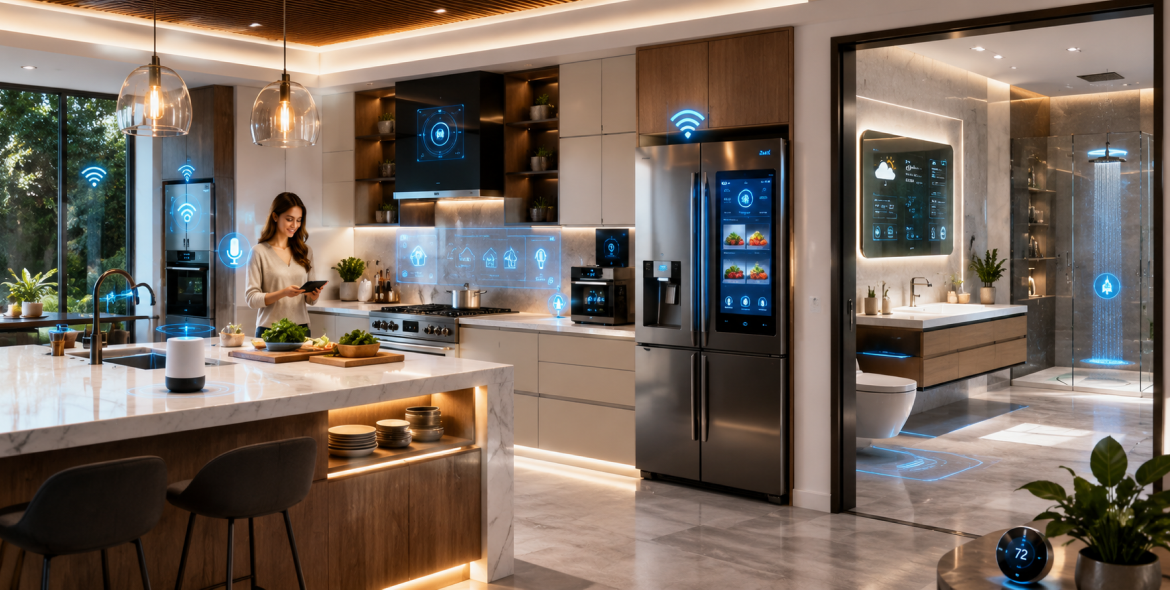
The home design industry has reached a point where all design work now requires technological resources, which designers must use to complete their projects. The use of smart kitchens and smart bathrooms will become standard practice in homes during the year 2026 because these systems depend on automated technology, artificial intelligence, and energy-efficient solutions. Your cooking and cleaning, and daily activities now rely on technology, which includes voice-activated devices and sensor-based restroom equipment.
Homeowners now expect their spaces to be intelligent, responsive, and energy-efficient. The latest smart kitchen technology trends 2026 go beyond the earlier innovations that made life easier because they now focus on individual user needs, environmental protection, and complete home system integration.
This blog examines how smart kitchen and bathroom technology are changing contemporary residential spaces and emerging design trends that will impact both future homeowners and designers.
The Evolution of Smart Kitchen and Bathroom Design
Over the past few years, bathrooms and kitchens have transformed from their original role as functional spaces into spaces that enable seamless connectivity. The development of smart appliances has progressed into a complete system operation.
In 2026, modern kitchen tech operational systems will connect all kitchen devices to each other. The current kitchen system uses artificial intelligence to control cooking processes, while bathroom facilities use sensors to enhance user comfort and decrease water consumption.
The transformation belongs to a broader trend that will reach its full development in home automation by the year 2026. The transformation needs to be completed because all areas of the house now include smart technology that operates through a unified system.
Smart Kitchens: The Heart of Modern Homes
The kitchen has become the most technology-driven space in the house. Smart kitchens today enable users to work less while achieving better results and enjoying improved cooking experiences.
AI-Powered Cooking Systems
The smart kitchen technology trends 2026 showcase their most important innovation through their AI cooking assistance systems. The systems can create recipe recommendations while they handle automatic temperature control, and they track the quality of food throughout the cooking process.
AI-enabled appliances help homeowners:
- Cook meals with precision
- Reduce food waste
- Save energy during cooking
- Receive real-time cooking guidance
This automation level is revamping the manner in which people interact with their kitchens.
Smart Refrigerators and Inventory Management
Smart refrigerators have become essential components of modern kitchen tech. Their functions extend beyond food storage to include inventory management and recipe recommendation, and low inventory notification systems.
Key benefits include:
- Automatic grocery tracking
- Expiry date notifications
- Recipe suggestions based on ingredients
- Energy-efficient cooling systems
The features reflect very much upon the everyday organization of the kitchen.
Voice-Controlled Kitchen Systems
Smart kitchen design trends now include voice assistants as essential components of their design. Homeowners can now control their home lights and appliances, and timers through voice commands, which they can use to operate their home devices.
The technology brings better convenience because it enables users to control their cooking activities without needing physical contact. The system provides enhanced safety features that protect users when they work in fast-paced restaurant environments that require multiple tasks to be completed simultaneously.
Smart Bathrooms: Comfort Meets Innovation
The year 2026 brings significant changes to bathroom facilities. The use of smart technology creates spaces that serve wellness purposes while providing efficient operations that enhance user comfort and maintain proper hygiene standards.
Sensor-Based Fixtures
Motion-sensor faucets, bathroom lights, and automatic toilets now appear in contemporary restrooms. The systems operate with dual benefits because they decrease water waste while enhancing sanitary conditions.
Benefits include:
- No-touch operation for a more hygienic environment.
- Less emphasis on water use
- Automatic light control
- Enhanced energy efficiency
The trend has gained momentum with the increasing demand for smart bathroom technology trends 2026.
Smart Mirrors and Digital Displays
High-end bathrooms now include smart mirrors as a rising trend, which serves as their latest feature. The mirrors show users real-time weather information, together with news updates and skincare advice.
They improve everyday life activities through their ability to combine practical needs with technological solutions. The bathroom remodeling ideas 2026 include this innovation, which serves as the main element for high-end residential properties.
Temperature and Water Control Systems
Advanced bathroom systems now allow users to preset water temperature and pressure. The system provides users with continuous comfort while the system uses less energy. The system provides users with continuous comfort while the system uses less energy.
Smart showers can:
- Maintain temperature parameters, whether by desired settings or usual settings.
- Track water consumption
- Bring pampering salon experiences to your doorstep.
- Improve energy efficiency
The restroom really becomes more personal and performs a much better role.
Integration of AI in Home Design
Artificial intelligence connects kitchen systems with bathroom systems through its primary function. Home devices now create a complete home experience because they operate together instead of functioning as separate units.
This integration serves as a central element of home automation trends 2026, which features AI systems that learn user behavior to make automatic adjustments to operational settings.
For example:
- Kitchen systems shall calibrate lighting in the context of cooking activities
- Bathrooms can manipulate the environment based on user schedules.
- The system achieves power optimization through its capacity to control energy usage between different rooms.
The ability for optimization brings us all smarter, more sustainable, and efficient homes.
Energy Efficiency and Sustainability
The main reason people adopt smart technologies in their homes is to achieve sustainable results. Homeowners are increasingly choosing systems that reduce energy and water consumption.
The smart kitchen technology trends 2026 now establish energy-efficient appliances as the standard. Smart bathrooms now implement both low-flow water systems and automated shut-off features.
Key sustainability benefits:
- Less power consumption
- Reduced water usage
- Integration of Eco-friendly Appliances
- The savings will continue for a long period of time.
This shift is indicative of an increasing spotlight on mindful, eco-friendly lifestyles.
Smart Storage and Space Optimization
Technology advances create better space solutions for kitchen and bathroom areas. The new smart storage systems utilize sensor technology and automated processes to achieve optimal operating performance.
In kitchens, drawers open automatically and organize items based on usage frequency. The bathroom requires modular storage systems that adapt their design according to the available space.
Modern kitchen tech is heading towards increased organization and function in the household.
Security and Smart Monitoring Systems
Smart technology is now contributing to house safety. Sensors are in the kitchen and bathrooms, detecting gas, water flow, and humidity.
Crucial alerts in real-time prevent physical harm and guarantee safety.
Features include:
- Gas leak detection systems
- Water leakage sensors
- Humidity control systems
- Remote monitoring via mobile apps
This injects a further layer of snugness to contemporary houses.
Personalized User Experience
The most exciting element of smart home technology functions through its ability to provide customized settings for each home user. Systems now adapt to individual user preferences over time.
In kitchens, AI systems track users’ cooking patterns to provide recipe suggestions. The bathroom systems maintain control of lighting and climate settings based on how users navigate the space.
The inclusion of AI in smart kitchen design trends is aimed towards reducing the adversities of different kinds, as homeowners revel in the ease and comfort provided by their very own technology.
The Future of Smart Kitchen and Bathroom Technology
The future development of smart kitchens and bathrooms will progress through the implementation of predictive artificial intelligence and automation systems, and complete home integration technology.
Future systems will support completely automatic cooking and bathroom wellness features powered by artificial intelligence and environments that users can control through voice and hand movements, and kitchen systems that produce no waste.
The smart kitchen technology trends 2026, will be influenced by these innovations, which create intelligent and efficient homes that provide optimal response to daily living requirements and comfort needs.
Final Thoughts
Home design requirements today need smart kitchen and bathroom technology because it has become an essential modern design element. Homeowners can now build smart homes because artificial intelligence, automation technologies, and energy-saving systems have become available.
The complete range of modern kitchen tech and advanced bathroom automation systems exists to provide people with better comfort and operational efficiency, which leads to more environmentally friendly outcomes.
The Target home automation trends 2026 will involve fully connected, real-time, living and working options, Inc. Home Automation for Real-Time Kitchens and Bathrooms.
For expert perspectives, remodeling guides, and design trends, please visit:- https://kitchenandbathresources.com/