

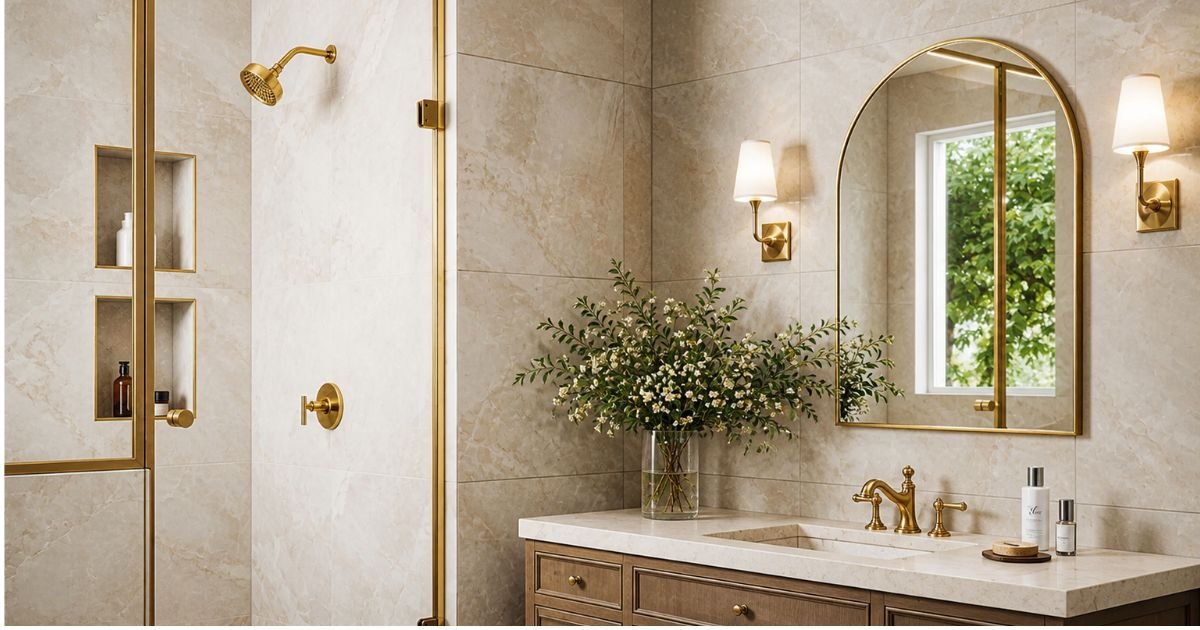
Choosing the right tile can change how a bathroom looks, feels, and functions. A large format tile bathroom design uses bigger tiles to create a cleaner visual appearance with fewer grout joints. This approach works especially well in contemporary, minimalist, and luxury-inspired bathrooms where homeowners want walls and floors to feel more continuous.
Large tiles can make a compact bathroom appear more spacious, reduce visible grout, and simplify routine cleaning. However, they also require careful planning, accurate substrate preparation, proper handling, and an experienced installer. Tile size alone does not guarantee a successful installation.
This guide explains the advantages and disadvantages of large-format bathroom tile, how grout lines affect the finished look, which materials work well, and what homeowners should know before installation.
Key Takeaways
- Large-format tiles can create a more continuous and spacious-looking bathroom surface.
- Fewer grout joints can make walls easier to maintain.
- Large tiles require flatter substrates and careful installation.
- Porcelain is a popular option because of its durability and moisture resistance.
- Tile size should be selected according to the wall dimensions and bathroom layout.
- Shower installations require appropriate waterproofing behind the tile.
- Minimal grout lines still require correct joint sizing and professional installation.
- Cutting, transporting, and positioning oversized tiles can require specialized tools and experience.
What Is Large-Format Bathroom Tile?
Large-format bathroom tile refers to tile products that are significantly larger than traditional small or medium-sized bathroom tiles. Exact size classifications can vary by manufacturer and industry context, but the category commonly includes large rectangular and square formats used on walls, floors, and shower surfaces.
A large-format tile installation can reduce the number of visible grout joints while creating a more unified appearance. Popular formats include large rectangles, oversized squares, and slab-like porcelain panels.
Common Applications
Large tiles can be used for:
- Bathroom walls
- Shower walls
- Bathroom floors
- Feature walls
- Vanity backsplashes
- Tub surrounds
- Wet-room surfaces
The best size depends on the room dimensions, wall layout, drainage requirements, door and window locations, and the installer’s ability to handle the selected material.
Pros of Using Large Bathroom Tiles
Large bathroom tiles can provide a modern appearance while reducing the amount of grout visible across a wall or floor. They can also create visual continuity, particularly when the same tile is carried across multiple surfaces. However, the benefits depend on proper material selection and installation.
1. Fewer Grout Joints
One of the biggest advantages is the reduction in grout lines. Fewer joints can make a wall look less visually fragmented.
This can be particularly useful in bathrooms where homeowners want a calm, streamlined appearance.
2. Spacious Visual Effect
Large surfaces can make a bathroom feel more open because fewer grout lines interrupt the visual field.
This does not physically increase the room’s size, but the continuous pattern can influence how spacious the bathroom appears.
3. Easier Routine Cleaning
Less grout can mean fewer joints that need regular scrubbing. This can make a properly installed surface easier to maintain.
An easy-to-clean bathroom tile is especially practical for busy households because smooth, well-maintained surfaces generally require less detailed grout cleaning.
4. Modern Appearance
Oversized tiles work naturally with contemporary bathroom styles. They can complement floating vanities, frameless shower glass, linear drains, and minimalist fixtures.
5. Strong Design Continuity
Large tiles can create a continuous visual relationship between the shower, vanity wall, and other bathroom surfaces when the layout allows it.
Cons of Large-Format Bathroom Tile
Large-format tile has clear aesthetic benefits, but installation can be more demanding than working with smaller tiles. The larger the product, the more important substrate flatness, handling, cutting, layout, and adhesive coverage become.
Homeowners should consider these limitations before selecting oversized tile.
Installation Can Be More Difficult
Large tiles are heavier and can be harder to position accurately. Some products may require specialized equipment and multiple installers.
Walls Must Be Properly Prepared
Large tiles can show variations in the underlying surface more easily. An uneven wall can create lippage, poor contact, or an inconsistent finished surface.
Cutting Requires Planning
Electrical outlets, plumbing fixtures, niches, corners, windows, and doors all require carefully positioned cuts.
A poor layout can result in narrow slivers of tile around edges.
Higher Installation Complexity
The tile itself may not always be dramatically more expensive, but installation can require additional labour, specialized tools, and careful handling.
Repairs Can Be Less Convenient
Replacing one oversized tile may require removing a much larger surface area than replacing a smaller individual tile.
Best Tile Materials for Large Bathroom Applications
Material selection matters as much as tile size. Porcelain is widely used in bathrooms because it is durable and available in many large formats, finishes, patterns, and colours.
Large-format porcelain bathroom tiles can work well for floors and walls when the product is suitable for the intended application and installed according to manufacturer requirements.
Other options include:
- Ceramic tile
- Natural stone
- Porcelain slabs
- Large-format engineered tile products
- Stone-look porcelain
Before purchasing, check the manufacturer’s specifications for water exposure, slip resistance, installation method, thickness, and approved applications.
Choosing Grout Lines for Large Tiles
Grout lines remain necessary even when large tiles are used. The appropriate joint width depends on tile characteristics, installation conditions, manufacturer recommendations, and applicable standards. A smaller joint should never be used simply to create a seamless appearance.
Large tiles can create a cleaner look with fewer joints, but grout still performs an important function.
Factors That Affect Grout Joint Size
Consider:
- Tile dimensional consistency
- Tile edge type
- Surface flatness
- Tile material
- Installation location
- Manufacturer recommendations
- Required movement joints
Rectified tiles generally allow more consistent joint sizing because their edges are precisely manufactured. Even so, installers should follow the product requirements rather than assuming the smallest possible joint is appropriate.
Large Format Tile Bathroom Design: Choosing the Right Style
A successful large format tile bathroom design should consider the entire room rather than treating the tile as an isolated finish. Colour, pattern, texture, grout, lighting, fixtures, and vanity materials all influence the final result.
Neutral Stone-Look Tile
Soft marble, limestone, or travertine-inspired porcelain can provide a sophisticated appearance without requiring natural stone maintenance.
Concrete-Inspired Tile
Grey and warm neutral concrete-look tiles work well with modern vanities, black fixtures, and minimalist lighting.
Warm Earth Tones
Beige, taupe, sand, and warm brown tones can make a bathroom feel more comfortable and residential.
Bold Veining
Large-format marble-look tile can showcase continuous veining across a wall. Careful slab and tile layout is important when visual continuity is part of the design.
Large-Format Tile for Shower Walls
Large-format tile can be highly effective on shower walls because fewer joints can create a visually continuous surface. However, the tile itself is not the waterproofing system. The shower assembly behind it must be properly designed and installed.
When using large format tile for shower walls, pay attention to:
- Waterproofing membrane
- Substrate preparation
- Drainage
- Tile weight
- Adhesive compatibility
- Niche placement
- Corner details
- Penetrations
- Movement joints
A shower should be treated as a complete waterproofed assembly rather than simply a tiled wall.
Large Tile Installation: What Homeowners Should Know
Successful Large Tile Installation starts before the first tile is placed. The installer should inspect the substrate, confirm the layout, verify tile requirements, and plan cuts before applying adhesive.
Step 1: Inspect the Substrate
The wall or floor should meet the required flatness and preparation standards for the selected tile.
Step 2: Plan the Layout
Determine where full tiles, cuts, niches, plumbing fixtures, and transitions will be located.
Avoid layouts that leave extremely narrow pieces at prominent edges.
Step 3: Check the Tile
Inspect tile batches for shade, size, warpage, finish, and visible defects before installation.
Step 4: Select the Correct Installation Materials
Use an adhesive and installation system appropriate for the tile size, substrate, and application.
Step 5: Apply the Tile Correctly
Large tiles require appropriate mortar coverage and handling techniques. The installer should follow the product manufacturer’s installation instructions.
Step 6: Allow Proper Curing
Do not rush the installation or expose newly installed tile to conditions that could interfere with curing.
Step 7: Complete Grouting and Sealing Where Required
Grout and any required sealers should be selected based on the tile, grout type, and location.
Bathroom Tile Ideas for Large-Format Designs
The best Bathroom Tile Ideas balance appearance with practical maintenance. Large tile does not have to mean an entirely plain bathroom.
You can create visual interest through:
- Contrasting floor and wall tiles
- Feature walls
- Different tile orientations
- Stone-look patterns
- Matte and textured finishes
- Recessed shower niches
- Decorative accent strips
- Coordinated grout colors
Using Different Tile Sizes
One effective design strategy is to use a large-format wall tile with a smaller floor tile. This provides visual contrast while keeping the walls relatively streamlined.
Bathroom Wall Tile Ideas for Different Styles
The right bathroom wall tile ideas depend on the room’s architecture, lighting, fixtures, and desired atmosphere.
For a minimalist bathroom, large warm-white tiles with matching grout can create a quiet backdrop.
For a luxury bathroom, marble-look porcelain with dramatic veining can become the main visual feature.
For a contemporary bathroom, concrete-look tile paired with wood-effect cabinetry can provide contrast between cool and warm materials.
Maintenance and Cleaning
Large tiles can simplify routine maintenance because fewer grout joints are present. However, cleaning requirements still depend on the specific tile surface, grout type, water conditions, and manufacturer’s recommendations.
For everyday care:
- Remove standing water when practical.
- Use manufacturer-approved cleaning products.
- Avoid abrasive products that may damage the finish.
- Clean grout according to the grout manufacturer’s guidance.
- Address leaks or damaged grout promptly.
- Maintain shower ventilation to reduce excessive moisture.
A low-maintenance bathroom is achieved through the entire design and construction system, not tile size alone.
Practical Examples
Example 1: Small Bathroom
A small bathroom with limited wall space may benefit from large light-colored wall tiles. Fewer grout joints can create a cleaner visual effect.
Example 2: Walk-In Shower
Large porcelain tiles can be used across shower walls while a smaller, appropriately rated floor tile provides the necessary design and installation flexibility.
Example 3: Luxury Primary Bathroom
A marble-look porcelain tile with dramatic veining can be used on the shower wall and vanity wall to create a coordinated focal point.
Example 4: Modern Family Bathroom
Large neutral tiles combined with a contrasting vanity, simple hardware, and well-planned lighting can provide a contemporary look without making the room feel overly decorative.
Large-Format Bathroom Tile: Pros and Cons at a Glance
| Factor | Advantages | Considerations |
| Appearance | Clean, continuous look | Layout must be carefully planned |
| Grout | Fewer visible joints | Correct joint width is still required |
| Cleaning | Less grout to maintain | Surface still needs regular cleaning |
| Installation | Efficient coverage of large areas | More difficult handling and cutting |
| Design | Modern and versatile | Large patterns require careful matching |
| Shower use | Can create continuous walls | Waterproofing remains essential |
| Maintenance | Fewer grout joints | Replacement can be more complicated |
Final Thoughts
A well-planned large format tile bathroom can create a clean, modern look while reducing visible grout lines and making the space easier to maintain. However, homeowners should consider tile size, material, grout joints, waterproofing, layout, and installation requirements before making a final decision.
Choosing the right tile is about balancing style with everyday practicality. With careful planning and professional installation, large-format tiles can work beautifully in both compact bathrooms and spacious remodels.
For more expert insights on kitchen and bathroom design, remodeling trends, and product solutions, Kitchen & Bath Resources provides useful guidance for homeowners, designers, and remodeling professionals.
FAQs
1. Is large-format tile good for bathrooms?
Yes. Large-format tile can work well on bathroom walls and suitable floors when the product is appropriate for the application and installed correctly. It can provide a spacious visual effect and reduce the number of grout joints.
2. What size tile is considered large format?
There is no single universal size that defines large-format tile in every context. Manufacturers and industry standards may use different classifications. Common large formats include oversized rectangles, squares, and porcelain panels.
3. Are large bathroom tiles easier to clean?
They can be easier to maintain because fewer grout joints are present. However, cleaning performance depends on the tile finish, grout, bathroom ventilation, water exposure, and maintenance routine.
4. Can large tiles be used on shower walls?
Yes, provided the selected product is suitable for the application, and the shower assembly has appropriate waterproofing, substrate preparation, adhesive, and installation methods.
5. Do large tiles need grout lines?
Yes. Large tiles still require appropriate joints. Joint width should be based on tile characteristics, manufacturer recommendations, installation conditions, and applicable requirements.
6. Are large-format porcelain tiles good for bathroom walls?
Large-format porcelain products can be an excellent option for bathroom walls because they are available in many designs and can provide a continuous appearance. Always verify that the specific product is approved for the intended installation.