

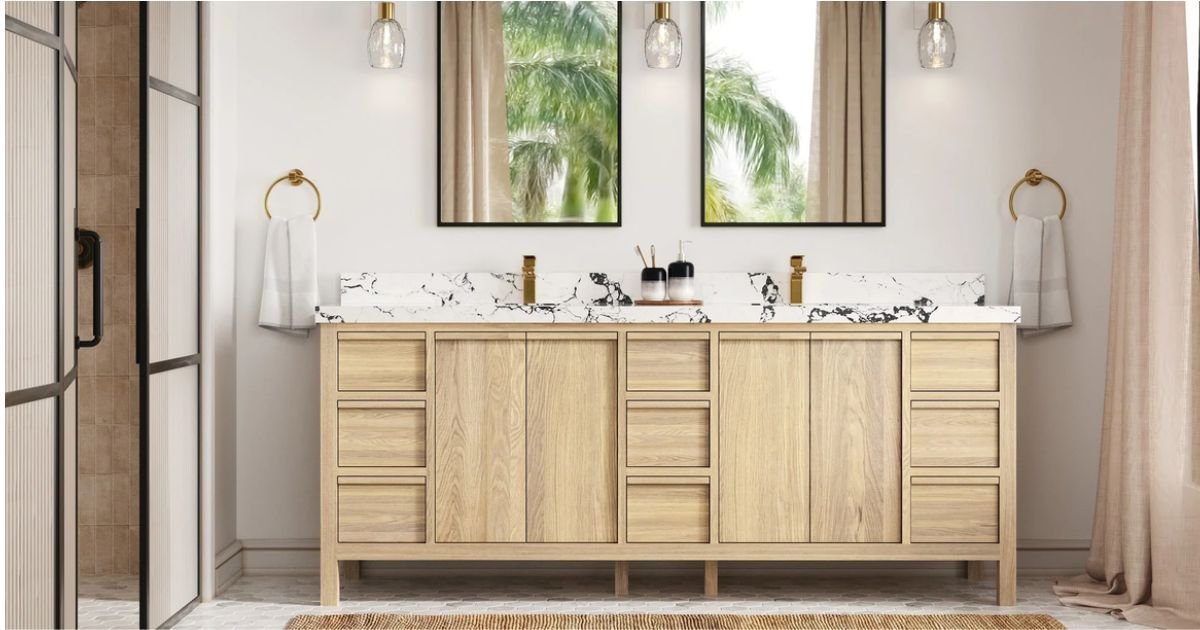
Choosing the right bathroom vanity can influence the look, storage, and overall feel of your bathroom. While layout and countertop materials matter, the wood used for the vanity also plays an important role. Two popular options are white oak and walnut, each offering a distinct appearance and practical benefits.
If you are comparing a white oak bathroom vanity with a walnut bathroom vanity, it helps to understand how they differ in colour, grain, durability, maintenance, and design compatibility. This guide compares both options to help you choose a vanity that suits your bathroom style and everyday needs.
White Oak Bathroom Vanity: Natural and Versatile
White oak is widely used in furniture because of its attractive grain, strength, and adaptable appearance. It usually has a light to medium brown tone with subtle variations that can give a bathroom a warm and natural character.
A white oak bathroom vanity can work particularly well in bathrooms with contemporary, Scandinavian, farmhouse, transitional, or minimalist interiors. Its relatively light colour can also help create a bright and open appearance.
Key Features of White Oak
- Light to medium natural tones
- Prominent but refined grain patterns
- Strong and durable construction
- Works with modern and traditional designs
- Pairs well with white, beige, grey, and stone finishes
- Can be stained or finished in different ways
White oak is also a practical choice when you want the vanity to become a versatile part of the bathroom rather than the dominant visual feature.
Walnut Bathroom Vanity: Rich and Sophisticated
Walnut is known for its deeper colour and distinctive grain. Depending on the specific wood and finish, walnut can range from medium brown to rich chocolate tones, sometimes featuring subtle variations.
A walnut bathroom vanity can create a more dramatic and sophisticated appearance. It is often suitable for contemporary, luxury, mid-century modern, and modern rustic bathrooms.
Because walnut naturally has a darker appearance, it can provide strong contrast against lighter walls, countertops, tiles, and bathroom fixtures.
Key Features of Walnut
- Rich brown and darker natural tones
- Distinctive grain variation
- Warm and premium visual appeal
- Suitable for modern and luxury interiors
- Creates contrast against light bathroom finishes
- Can become a strong focal point
If you want the vanity to add visual depth to the bathroom, walnut can be an appealing option.
Oak vs Walnut Vanity: Key Differences
When comparing an oak vs walnut vanity, the decision is not simply about which wood is better. Both have different characteristics that may suit different bathroom designs.
| Feature | White Oak | Walnut |
| Colour | Light to medium brown | Medium to dark brown |
| Grain | More visible and structured | Generally smoother and varied |
| Style | Natural, modern, Scandinavian, farmhouse | Luxury, contemporary, mid-century |
| Visual effect | Bright and airy | Warm and dramatic |
| Design flexibility | High | High |
| Maintenance | Requires suitable protective finish | Requires suitable protective finish |
| Best for | Light, natural interiors | Rich, sophisticated interiors |
The right choice depends on your preferred aesthetic, bathroom lighting, surrounding finishes, and how prominent you want the vanity to be.
Which Wood Is More Durable for a Bathroom?
Durability is an important consideration because bathroom furniture is exposed to humidity, moisture, splashes, and frequent cleaning.
Both white oak and walnut are hardwoods and can be used for bathroom furniture when properly constructed and finished. However, the overall durability of a vanity depends on more than the species of wood.
Construction quality, joinery, sealing, finish, installation, and moisture exposure all affect how well the vanity performs over time.
When comparing durable bathroom vanity materials, look beyond the wood species. A well-built vanity with properly sealed surfaces and edges can offer better long-term performance than a poorly constructed vanity made from a naturally durable wood.
What Makes a Wooden Vanity Durable?
Consider the following factors:
- Properly dried and prepared wood
- Quality joinery and construction
- Moisture-resistant protective finishes
- Properly sealed edges and joints
- Good ventilation in the bathroom
- Correct installation around plumbing
- Regular cleaning with suitable products
Wood should not be treated as completely waterproof. Even durable hardwoods need protection when used in moisture-prone areas.
White Oak vs Walnut: Which Looks Better?
Appearance is one of the biggest differences between these two woods.
White oak generally creates a lighter and more relaxed appearance. Its natural grain can add texture without making the vanity feel visually heavy. This makes it useful for bathrooms where you want a clean and spacious atmosphere.
Walnut has a deeper and richer appearance. Its darker tones can make the vanity stand out and add warmth to a neutral bathroom.
For example, white oak can pair naturally with:
- White quartz countertops
- Light porcelain tiles
- Matte black fixtures
- Beige walls
- Natural stone
- Soft neutral colours
Walnut can pair well with:
- White countertops
- Dark or brushed metal fixtures
- Marble surfaces
- Neutral wall colours
- Large-format tiles
- Warm lighting
The surrounding materials should therefore be considered before selecting the wood.
How Bathroom Lighting Affects Your Choice
Lighting can significantly change how wood appears.
A bathroom with limited natural light may benefit visually from lighter wood tones. White oak can help maintain a brighter overall appearance, particularly when combined with light walls and countertops.
Walnut can work beautifully in a well-lit bathroom, where its deeper colour adds contrast without making the space feel too dark.
If your bathroom has large windows or strong artificial lighting, walnut can create a warm and sophisticated atmosphere. For smaller bathrooms with limited light, white oak may provide a more open visual effect.
Best Wood for Bathroom Vanity: What Should You Consider?
There is no single best wood for bathroom vanity applications because the right choice depends on your requirements.
Before making a decision, consider these factors:
1. Bathroom Size
In a compact bathroom, lighter finishes can help create a more spacious appearance. White oak may work particularly well in such spaces.
In larger bathrooms, walnut can be used to create a stronger focal point.
2. Interior Style
Think about the existing design of your bathroom. White oak is highly adaptable and works across several styles. Walnut is especially useful when you want a rich, refined or statement-making finish.
3. Colour Scheme
Look at your flooring, wall colour, countertop, mirrors, and fixtures. The vanity should complement these elements rather than compete with them.
4. Maintenance
Both woods need appropriate care. A protective finish can help reduce the effects of moisture and everyday use. Avoid allowing standing water to remain on wooden surfaces.
5. Personal Preference
Your vanity is a prominent part of the bathroom, so the colour and grain should match your preferred aesthetic. Natural wood variations also mean that every piece can have a slightly different appearance.
Understanding Bathroom Vanity Wood Types
When exploring bathroom vanity wood types, you may come across several options, including oak, walnut, maple, teak, cherry, and other hardwoods.
Each wood has its own colour, grain, hardness, availability, and finishing characteristics. However, selecting the wood alone is not enough.
For bathroom applications, you should also consider:
- Moisture exposure
- Finish quality
- Wood preparation
- Cabinet construction
- Hardware quality
- Countertop installation
- Bathroom ventilation
The best material is one that combines suitable wood characteristics with quality manufacturing and appropriate protection.
Solid Wood Bathroom Vanity: Is It Worth Choosing?
A solid wood bathroom vanity can offer a natural appearance, substantial feel, and distinctive grain patterns. It can also be refinished in some cases, depending on the construction and finish.
However, solid wood does not mean maintenance-free or completely moisture-proof. Bathroom conditions can affect natural wood if moisture is allowed to penetrate unprotected areas.
When purchasing a solid wood vanity, check whether the manufacturer has considered bathroom-specific conditions. Look at the finish, construction details, hardware, drawer systems, and areas around sinks and plumbing.
A quality finish and proper installation are particularly important.
Maintenance Tips for White Oak and Walnut Vanities
Whichever wood you choose, regular maintenance can help preserve its appearance.
Keep the Surface Dry
Wipe away water splashes rather than allowing moisture to sit on the surface.
Use Gentle Cleaning Products
Follow the manufacturer’s recommendations. Avoid harsh cleaners that may damage the protective finish.
Improve Bathroom Ventilation
Good ventilation helps reduce excessive humidity and moisture accumulation.
Check Around the Sink
The area around the sink is especially vulnerable to water exposure. Inspect it periodically for signs of moisture damage.
Avoid Abrasive Materials
Use soft cloths for everyday cleaning to minimise the risk of scratches or finish damage.
White Oak or Walnut: Which One Should You Choose?
The choice between white oak and walnut ultimately comes down to the visual direction and practical requirements of your bathroom.
Choose white oak if you prefer:
- A lighter, natural appearance
- Visible wood grain
- A bright and airy bathroom
- A versatile material for different interior styles
- A subtle natural focal point
Choose walnut if you prefer:
- Richer brown tones
- A sophisticated appearance
- Strong contrast with light surfaces
- A warmer and more dramatic design
- A statement vanity
Both can work well when properly designed, constructed, finished, and maintained.
Final Thoughts
White oak and walnut can both bring natural warmth and character to a bathroom vanity. White oak offers a lighter, versatile look, while walnut provides deeper tones and a more dramatic visual presence.
When selecting between a white oak bathroom vanity and a walnut bathroom vanity, consider your bathroom size, lighting, interior style, colour palette, maintenance expectations, and construction quality. The wood is only one part of the decision. A properly finished and well-built vanity is equally important for long-term use.
By comparing these factors carefully, you can select a wood bathroom vanity that complements your bathroom design while providing the functionality and storage you need.
FAQs
1. Is white oak or walnut better for a bathroom vanity?
Both work well. White oak offers a lighter look, while walnut has a richer, darker appearance.
2. Is walnut good for bathroom vanities?
Yes. With proper sealing and care, walnut can be a durable and stylish vanity material.
3. Is white oak suitable for bathrooms?
Yes. White oak is a durable hardwood and works well when properly finished and protected from moisture.
4. How do you maintain a wooden bathroom vanity?
Keep it dry, wipe spills quickly, use gentle cleaners, and ensure good bathroom ventilation.
5. Which is better for a small bathroom?
White oak can make a small bathroom feel brighter and more spacious because of its lighter colour.