
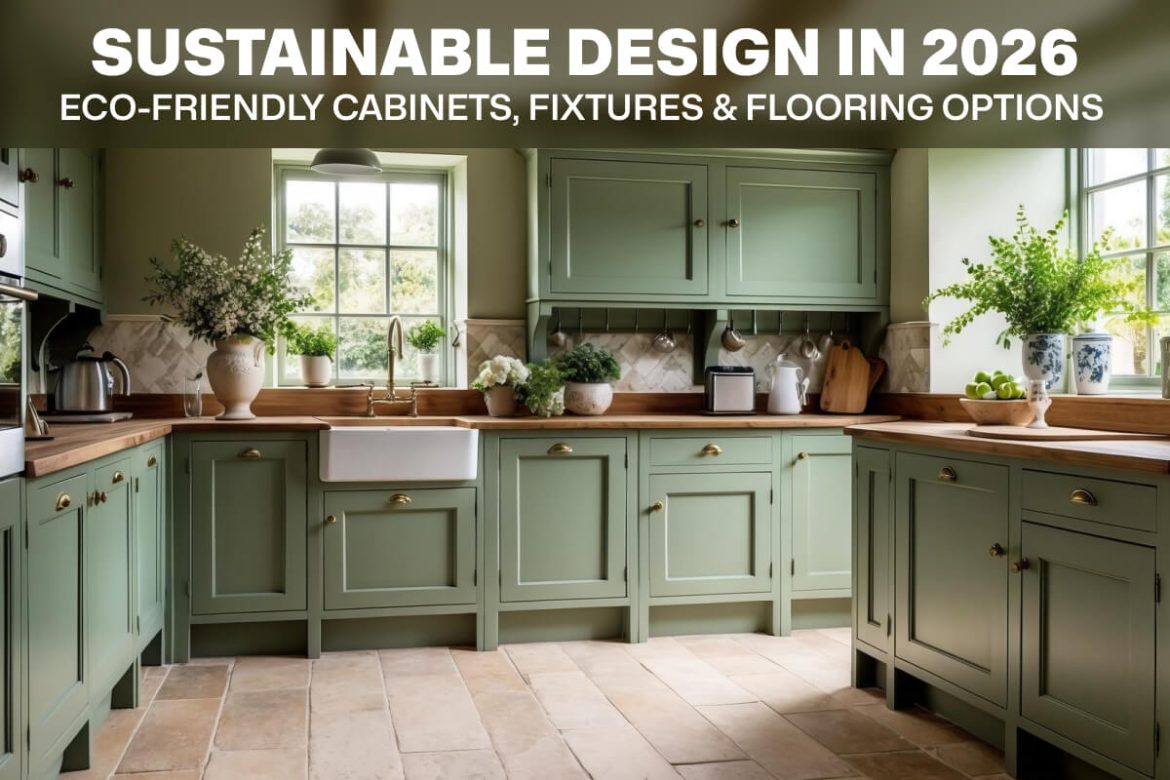
In 2026, sustainability has become more than a buzzword—it’s now a standard homeowners expect in kitchen and bath remodels. From cabinets made of reclaimed wood to low-flow faucets and responsibly sourced flooring, today’s consumers are looking for eco-conscious choices that match their style, budget, and environmental values.
According to the National Association of Home Builders (NAHB), over 61% of homeowners now say that energy efficiency and sustainable features are among their top three priorities when renovating. Meanwhile, reports from Statista show the global green building materials market is projected to surpass $575 billion by 2027, with kitchen and bath materials being key growth contributors.
So, what does sustainable design look like in 2026? Let’s dive into the cabinetry, fixtures, and flooring options leading the green wave.
Eco-Friendly Cabinets: Where Function Meets Responsibility
Cabinets are often the focal point in kitchens and bathrooms. Fortunately, the options for sustainable cabinetry have expanded dramatically.
Solid wood cabinets from responsibly managed forests continue to lead the charge, especially when they carry FSC (Forest Stewardship Council) certification. These woods are harvested in ways that protect biodiversity, reduce deforestation, and support fair labor practices.
In addition to FSC certification, many cabinet lines in 2026 also adhere to CARB2 compliance—standards set by the California Air Resources Board that limit formaldehyde emissions in wood products. This ensures healthier indoor air quality, which has become a top concern for families spending more time at home.
Materials like bamboo, reclaimed wood, and even recycled composite panels are gaining traction for their renewability and unique visual appeal. These choices don’t just reduce environmental impact—they often introduce textures and tones that standard cabinetry can’t replicate.
Some leading manufacturers now offer lines built entirely from post-consumer recycled wood fiber and low-VOC finishes. Brands are also innovating with water-based adhesives, energy-efficient production methods, and packaging that minimizes waste.
Fixtures & Fittings: Designed for Water and Energy Efficiency
When it comes to fixtures—think faucets, showerheads, toilets, and lighting—2026 design is focused on low-flow, high-style performance.
WaterSense-certified products from the U.S. Environmental Protection Agency (EPA) continue to set the gold standard. These fixtures use at least 20% less water without sacrificing performance. For example, a standard bathroom faucet uses 2.2 gallons per minute, while a WaterSense model reduces this to 1.5 gallons or less.
In a typical household, swapping in WaterSense faucets and showerheads can save more than 2,000 gallons of water annually, according to the EPA. That translates to lower water bills and meaningful conservation.
In kitchens, sensor-activated faucets and dishwashers with ENERGY STAR ratings are becoming the norm. These technologies help reduce both water and energy consumption—two of the most significant environmental impacts in residential construction.
Fixtures now go beyond utility. Many eco-friendly designs feature materials like recycled stainless steel, ceramic, or even biodegradable plastics, marrying form with function. Matte black, brushed gold, and copper finishes remain on-trend, proving that sustainability doesn’t mean compromising on style.
Sustainable Flooring: The Foundation of Green Living
Flooring choices play a major role in both environmental impact and indoor air quality. Today’s homeowners are opting for renewable, non-toxic materials that contribute to cleaner living environments and lower carbon footprints.
One of the top trends in 2026 is engineered hardwood flooring made with recycled wood layers and finished with low-VOC sealants. These products offer durability and the beauty of hardwood, but with a smaller environmental footprint.
Bamboo flooring, with its rapid renewability and strength, is another popular option. It matures in just three to five years (compared to 20+ for hardwood), making it a favorite for eco-conscious remodels.
Cork flooring, harvested without cutting down trees, provides natural insulation and cushioning while being antimicrobial and mold-resistant. Its acoustic-dampening properties also make it ideal for kitchens with open layouts.
Linoleum, made from linseed oil, pine resin, and wood flour, is making a comeback as a sustainable, biodegradable option that’s incredibly long-lasting. Unlike vinyl, linoleum contains no synthetic materials or harmful plastics.
Most importantly, flooring manufacturers are becoming more transparent about what goes into their products. Look for GreenGuard Gold or FloorScore certifications, which ensure that the materials meet strict indoor air quality standards.
Beyond Materials: Smarter Choices, Healthier Homes
Sustainable design doesn’t end with materials. It extends into the practices and decisions homeowners and contractors make throughout the renovation process.
One major shift in 2026 is the demand for locally sourced materials. By choosing regional products, homeowners can reduce the carbon emissions associated with long-distance shipping. Local sourcing also supports regional economies and often results in shorter lead times.
Another trend is the move toward modular design—where kitchen and bath components are prefabricated off-site, reducing waste, installation time, and energy usage during remodeling. These modular systems are often designed with disassembly in mind, so parts can be reused or recycled at the end of their lifecycle.
The circular design economy—an approach where materials are reused, repurposed, or recycled—is slowly but steadily entering the mainstream. This mindset pushes homeowners to consider how their design choices today impact the environment tomorrow.
Who’s Leading the Charge?
Across the kitchen and bath industry, many top brands are embracing sustainable design principles:
Waypoint Living Spaces has expanded its collection of CARB2-compliant cabinets.
Moen and Kohler have introduced new lines of WaterSense-certified faucets and showerheads.
Interface and Shaw Floors now offer carpet and tile products made with high post-consumer recycled content and transparent environmental labeling.
Consumers are also turning to design professionals who specialize in eco-conscious renovations, as evidenced by a 2025 Houzz survey showing a 36% increase in demand for sustainable interior designers.
Looking Ahead: Green Is the New Luxury
Sustainable design is no longer a fringe idea—it’s the new luxury standard. As consumers become more aware of how their choices impact the planet and their health, demand for environmentally responsible materials and products will continue to grow.
Designers, builders, and manufacturers who prioritize transparency, certifications, and green innovations are likely to earn trust—and business—in the years ahead.
Whether you’re planning a full-scale kitchen renovation or simply updating a guest bathroom, there’s no shortage of eco-friendly options in 2026. Sustainable design is more accessible, affordable, and stylish than ever before.
At Kitchen & Bath Resources, we’re committed to keeping you ahead of the curve with the latest insights in design, innovation, and sustainability. From material guides to green certifications and industry trend updates, we’re your go-to source.
 Want more kitchen and bath industry news like this? Subscribe now and get the latest updates delivered straight to your inbox!