

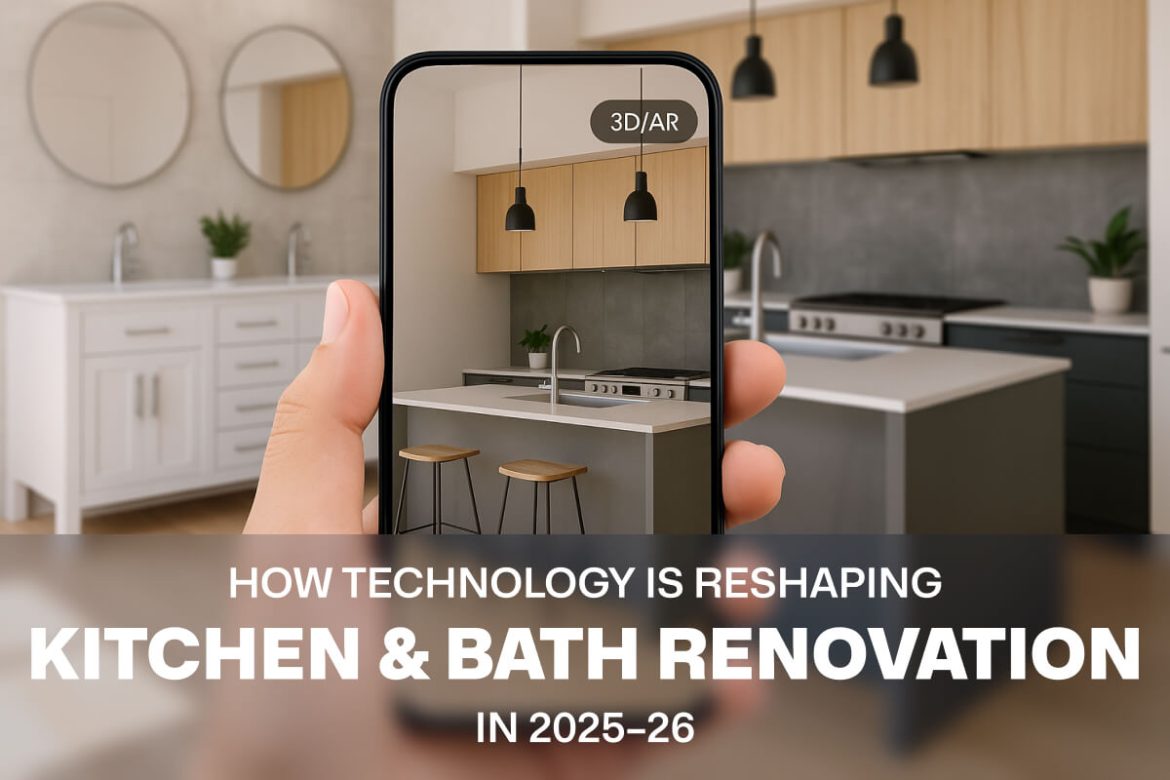
The kitchen and bath renovation world is undergoing a revolution—and it’s being driven by technology. What was once a hands-on, in-person, and highly physical process is now evolving into something smarter, more virtual, and increasingly personalized. In 2025 and heading into 2026, homeowners, designers, and builders alike are embracing digital tools, artificial intelligence, and immersive planning platforms that are making remodeling more efficient, data-driven, and future-ready.
From AI-powered layout design to augmented reality visualization and smart appliances, the intersection of tech and renovation is no longer a luxury—it’s quickly becoming the industry standard.
Here’s how the digital transformation is impacting every stage of kitchen and bath remodeling.
The Rise of AI in Kitchen and Bath Planning
Artificial Intelligence (AI) is now playing a pivotal role in kitchen layout optimization, cabinet placement, color palette prediction, and even appliance coordination. In 2025, many leading virtual design platforms are powered by AI algorithms that analyze room dimensions, traffic flow, and user preferences to generate custom layouts in minutes.
Instead of relying solely on human designers, AI can now recommend efficient cabinet configurations, suggest where to place lighting for maximum impact, and even identify potential clearance issues based on appliance specifications. Some platforms are capable of adjusting your layout in real time as you change your budget, style preference, or square footage.
This doesn’t eliminate the need for professionals—it enhances their capabilities and accelerates decision-making for clients.
Related Read: How Much Does Virtual Kitchen Design Cost in 2026?
Augmented Reality (AR) Brings the Design to Life
One of the most talked-about innovations in 2025 is Augmented Reality (AR)—and it’s taking kitchen and bath previews to the next level. Using a smartphone or tablet, homeowners can now visualize cabinetry, countertops, lighting, and hardware directly in their space before committing to a purchase.
Instead of staring at a 2D mood board, clients can “walk through” their redesigned space in real time, opening drawers, turning on faucets, and viewing finishes in natural lighting—all through AR overlays.
This immersive tech reduces buyer hesitation and increases satisfaction by giving homeowners a clear picture of the final result before any demolition begins. Major brands and even independent designers are integrating AR into their proposals, making it a competitive edge.
Remote Collaboration Is Now the Norm
In a post-pandemic, tech-forward world, homeowners no longer expect to visit a showroom or schedule in-person meetings to get professional guidance. Thanks to platforms like Zoom, Matterport, and virtual whiteboards, design collaboration now happens from anywhere.
Clients can send photos, blueprints, or even 3D scans of their space, and designers can mark up layouts or render adjustments in real time. Cloud-based file sharing, digital product libraries, and 3D walkthroughs make the process seamless for homeowners and efficient for firms managing multiple projects across different locations.
This remote-first model has especially benefited homeowners in rural areas or smaller markets who now have access to top-tier design talent nationwide.
Explore More: What Does a Kitchen Remodeling Service Include?
3D Design Tools Are Smarter Than Ever
The latest generation of 3D kitchen and bath design software—like 2020 Design Live, Chief Architect, and SketchUp Pro—is more intelligent, intuitive, and integrative. These tools go far beyond static floor plans, offering photorealistic renderings with customizable lighting, material textures, and motion simulations.
In 2025, some platforms even allow clients to swap out brands and see how each faucet, cabinet finish, or tile option affects both the look and cost of their remodel instantly. This level of transparency is helping homeowners make faster, more confident decisions.
For designers, these tools save hours of drafting time and allow for better client presentations—particularly when competing for high-end or commercial projects.
Smart Appliances and Connected Systems Lead the Way
The line between tech and function is blurring, especially when it comes to appliances and fixtures. In 2025–26, kitchen and bath renovations increasingly include connected products such as:
Voice-activated faucets and lighting
Refrigerators that monitor groceries and expiration dates
Ovens with remote control and smart scheduling
Smart mirrors and touchless toilets in luxury bathrooms
These features aren’t just novelties—they offer real benefits in energy efficiency, convenience, and even accessibility.
Designers are now incorporating smart appliances as part of the early planning phase, ensuring that electrical and cabinetry requirements are aligned from day one.
Sustainability Tech Is Embedded in the Process
Environmental consciousness is a growing priority for homeowners, and technology is helping make green renovations easier to plan and execute. In 2025, tools are being used to track the carbon footprint of materials, measure energy usage of appliances, and guide product selections based on eco-certifications.
Some platforms even score renovation projects based on sustainability benchmarks, helping clients visualize the environmental impact of their remodel and choose greener alternatives in cabinetry, countertops, flooring, and lighting.
This trend will only grow stronger as younger homeowners—who value both design and climate responsibility—take on more renovation projects in 2026.
Tariff Pressures Are Driving Digital Efficiency
While technology is evolving, so is the economic landscape. With new tariffs on imported cabinetry, aluminum, and quartz surfaces in 2025, costs are rising across the industry.
As we explored in our recent blog, Tariff Pressures in 2025: How Rising Import Costs Are Shaping the Kitchen & Bath Industry, many companies are turning to digital tools to mitigate cost overruns, reduce waste, and optimize purchasing timelines.
By using forecasting software and AI-based layout optimization, designers can now create plans that minimize costly cuts, account for material availability, and lock in accurate lead times—even during supply chain volatility.
Challenges to Watch For
As with any innovation, rapid adoption of technology comes with growing pains. Some homeowners feel overwhelmed by too many digital options. Others worry that replacing human input with AI could reduce personalization.
There are also concerns about platform compatibility, long learning curves for new tools, and data privacy when using smart home systems.
Designers and builders must balance tech with human touch, ensuring the client experience remains accessible, supportive, and creative—not just automated.
Final Thoughts: A Smarter Future for Kitchen & Bath Design
The kitchen and bath industry is entering a new era—one powered by AI insights, immersive planning, and smart product integration. In 2025 and 2026, technology isn’t just enhancing how we remodel homes—it’s redefining what’s possible.
From virtual layouts and AR previews to sustainable planning and smart appliances, the digital toolbox available to professionals and homeowners is richer than ever. And while no technology can replace the vision of a skilled designer, the right tools make that vision clearer, faster, and more accessible.
As we look ahead, one thing is certain: the future of renovation is intelligent, connected, and designed to evolve—just like the spaces we live in.