

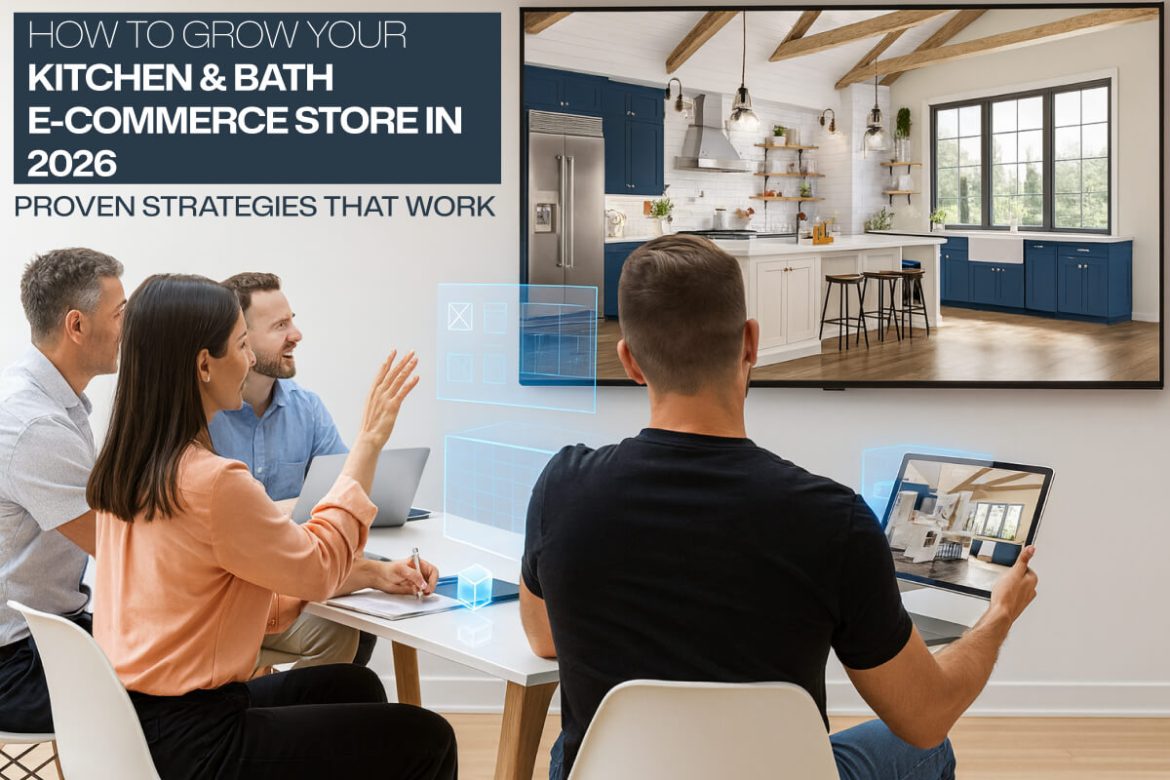
The Kitchen & Bath (K&B) industry has entered a new digital era. Homeowners expect immersive online shopping, manufacturers want stronger digital presence, and retailers are realizing that traditional selling methods are no longer enough. As competition increases in 2026, every Kitchen & Bath e-commerce business—whether selling cabinets, vanities, sinks, faucets, countertops, or accessories—must adopt modern strategies to stay ahead.
This guide breaks down proven, real-world growth strategies specifically for the Kitchen & Bath market—based on current data, emerging technologies, and industry behavior patterns. Whether you operate an RTA cabinet store, a kitchen showroom, or a multi-category renovation brand, these insights will help you scale faster in 2026.
1. Build a High-Performance E-Commerce Foundation (Speed + Structure + Scalability)
K&B products are complex: multiple door styles, colors, SKUs, materials, hinge options, assembly differences, and price variations. A standard e-commerce setup struggles with this complexity.
To grow in 2026, your site MUST provide:
Lightning-fast page loads
Slow websites lose 40% of potential buyers.
Clean product architecture
Customers must easily filter by:
- Style (Shaker, Slim Shaker, Raised Panel)
- Color (White, Navy, Natural Wood, Slate)
- Construction (Frameless, Framed, Inset)
- Assembly Type (RTA or Assembled)
Mobile-first shopping experience
More than 72% of K&B buyers browse on mobile before visiting showrooms.
Accurate SKU mapping & pricing logic
Kitchen cart values are high—accuracy builds trust.
A well-engineered platform is the foundation of your growth.
2. Leverage 3D Visualization to Increase Customer Confidence
In 2026, U.S. consumers expect to see exactly what they are buying before committing to a kitchen cabinet purchase. Visual-first shopping has become essential, making 3D kitchen visualization tools a critical driver of trust, engagement, and online conversion rates across the American kitchen and bath market.
3D Tools That Increase Conversions for U.S. Buyers
3D Cabinet Door Previews
High-resolution 3D cabinet door previews allow customers to evaluate door styles, finishes, and construction details with clarity. This reduces uncertainty and helps U.S. homeowners feel confident in their selections before requesting quotes or placing orders.
360° Product Rotation
Interactive 360-degree product views give buyers a complete understanding of cabinet depth, texture, and proportions. This feature closely replicates an in-showroom experience, especially valuable for online cabinet shoppers in the U.S.
AR-Based “View in Your Kitchen” Tools
Augmented reality tools let customers visualize cabinets directly in their own kitchens using a mobile device. This localized, real-world preview increases buyer confidence and shortens the decision-making process.
Countertop and Backsplash Visualizers
Integrated countertop and backsplash visualizers help customers see how materials work together in one cohesive design. This simplifies design decisions and increases average order value by encouraging bundled selections.
Color Simulations Under Different Lighting
Lighting simulation tools show how cabinet colors appear under natural and artificial light. This addresses one of the biggest buyer concerns in online cabinet shopping and significantly reduces post-purchase dissatisfaction.
Virtual Showroom Experiences
Virtual showrooms recreate the feel of a physical display, allowing customers to explore full kitchen layouts online. For U.S.-based eCommerce sellers, this bridges the gap between digital shopping and in-person consultation.
These 3D visualization and AR tools dramatically reduce buyer hesitation and increase “Add to Cart” activity by helping customers make informed, confident decisions. For U.S. kitchen and bath brands, better visualization directly translates into higher engagement, fewer abandoned carts, and stronger conversion performance.
3. Use AI to Personalize the Shopping Experience
Artificial intelligence is rapidly transforming the Kitchen & Bath eCommerce landscape. In 2026, the fastest-growing U.S. kitchen cabinet and vanity stores are using AI-driven personalization to guide shoppers faster, reduce decision fatigue, and improve conversion rates across the entire buying journey:
AI-powered search
Modern shoppers no longer search with generic keywords—they use conversational, intent-driven queries. AI-powered search engines understand context and intent, helping users find exactly what they want faster. Common U.S. search queries include:
- “White shaker for small kitchen”
- “Budget vanity sets under $800”
- “Slim shaker 2026 trending designs”
AI interprets the intent—not just keywords.
AI product recommendations
Upsell, cross-sell, and suggest matching accessories automatically.
AI-powered customer support bots
AI chatbots provide instant answers to common buyer questions, including lead times, stock availability, shipping options, installation guidance, and color selection support. This real-time assistance improves customer experience while reducing manual workload for sales and support teams.
AI reduces manual workload and increases conversions by providing instant responses.
4. Focus on High-Quality Visual Content
In the U.S. Kitchen & Bath market, high-quality visual content consistently outperforms text when it comes to engagement and conversions. Professional 3D kitchen renderings, real kitchen photography, and lifestyle cabinet images help buyers visualize products with confidence, increasing trust, lowering bounce rates, and driving higher purchase intent across kitchen cabinet and vanity eCommerce stores.
You need:
- Professional kitchen renders
- Real kitchen photo galleries
- Before/after transformation images
- Lifestyle shots showcasing cabinetry in real spaces
- Short TikTok/Reels style content demonstrating product details
High-quality imagery increases trust and reduces bounce rate.
5. Offer Clear Pricing, Shipping, and Lead-Time Transparency
Kitchen & Bath purchases involve high investment and long planning cycles. Buyers want clarity before making decisions.
Be transparent about:
- Delivery timelines
- Manufacturing time
- White glove vs curbside delivery
- Freight handling
- Return policies
- Warranty terms
The clearer the store, the higher the conversion rate.
6. Build a Strong Content Engine (Your Biggest Free Growth Weapon)
The Kitchen & Bath industry is content-driven. Homeowners spend weeks or months researching before they buy.
Your e-commerce store should publish:
Trend articles (2026 cabinetry trends, color trends, layout ideas)
Buying guides (RTA vs Assembled, Shaker vs Slim Shaker)
Installation tips and checklists
Renovation budget guides
Brand comparisons
Product deep dives
High-quality content improves search ranking and authority—bringing organic traffic for years.
7. Invest in Visual Commerce Optimizations
Kitchen and bath shoppers in the U.S. rely heavily on visuals to evaluate cabinet quality, finishes, and construction details before buying online.
Implement these optimizations:
- Zoom-in detail shots on grain texture
- Room scenes for every cabinetry collection
- Visual comparison charts
- Color swatches placed side by side
- Close-up videos showing construction quality
Great visuals help shoppers feel like they visited a showroom—even online.
8. Strengthen Dealer, Distributor, and B2B Capabilities
A major revenue opportunity in 2026 is B2B:
- Showrooms
- Remodelers
- Builders
- Interior designers
- Real estate developers
Your platform should include:
Dealer login systems
B2B pricing tiers
Fast quote tools
Bulk ordering features
Dedicated sales rep assignment
Automated proposal generation
B2B clients spend more—and repeat often if the ordering experience is smooth.
9. Use Data and Analytics to Understand Buyer Behavior
The fastest-growing e-commerce brands focus on data-driven decisions.
Track:
- Most viewed products
- High-exit pages
- Time spent before purchase
- Costliest drop-off points
- Funnel performance
- Add-to-cart abandonment rate
Data tells you what to fix, what to improve, and what to promote.
10. Build Trust Through Branding, Policies, and Consistency
Trust decides whether shoppers purchase cabinetry online.
Ways to build trust:
- Professional branding
- Real customer reviews
- Detailed return & warranty policies
- High-quality product information
- Design guides
- Multi-channel customer support
- Social media presence showing real projects
Consistency across platforms makes your brand feel reliable and established.
The Strideck Difference in the Kitchen & Bath E-Commerce Space
Strideck has become one of the most trusted technology partners in the North American K&B industry by building scalable, high-performance e-commerce solutions, advanced 3D visualization systems, and AI-powered shopping tools specifically tailored for cabinet manufacturers, kitchen showrooms, and online retailers.
The company’s long-term client retention—some partnerships lasting over nine years—reflects its commitment to quality, innovation, and reliability. Behind Strideck’s operational strength is a leadership team focused on industry advancement, including the combined expertise of Ravi Patel and Mansi Patel, whose vision in technology, user experience, and product visualization continues to guide Strideck’s excellence and support its clients’ long-term growth.
The Future of K&B E-Commerce in 2026 and Beyond
E-commerce success in the K&B industry requires more than a website. The brands that grow the fastest are those that embrace:
- Visual commerce
- AI-driven personalization
- High-quality product presentation
- Advanced 3D tools
- Search engine authority
- Seamless shopping workflows
- Strong B2B capabilities
Strideck continues to push these innovations forward, helping brands evolve with digital trends and customer expectations.
Conclusion: Growth in 2026 Begins With Innovation
To succeed in the Kitchen & Bath eCommerce market in 2026, brands must go beyond competitive pricing and product quality by embracing digital innovation, advanced technology, and customer-centric strategies. Companies that invest in AI-powered tools, 3D kitchen design experiences, personalized online shopping journeys, fast eCommerce architecture, and high-quality content marketing will consistently outperform competitors in an increasingly crowded market.
Growth is no longer driven by traditional sales models alone. In 2026, scalable success depends on how effectively brands integrate virtual kitchen design, intelligent product visualization, automation, and data-driven personalization into their eCommerce platforms. For Kitchen & Bath businesses looking to increase conversions, improve customer engagement, and build long-term brand authority, innovation is no longer optional—it is essential.
Subscribe now to get more updates and trending information about the kitchen and Bath Industry!