
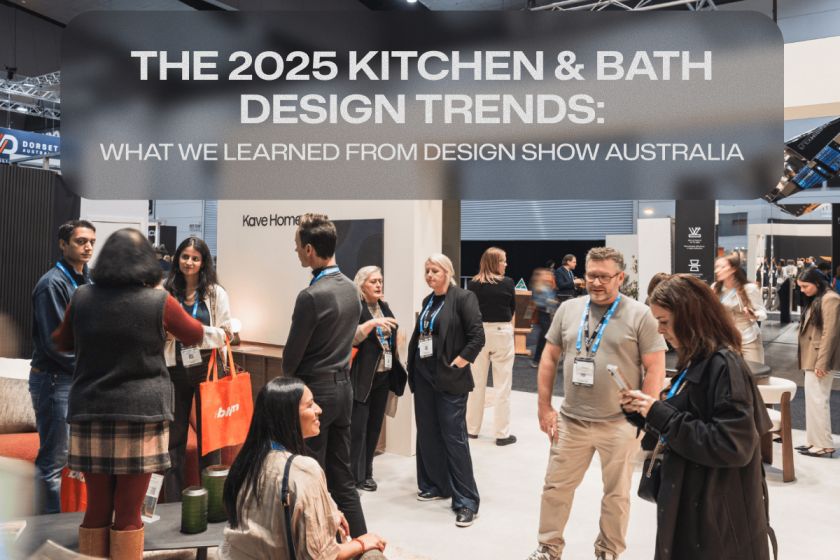
From the vibrant halls of the ICC Sydney, the Kitchen+Bath Show at Design & Build Week Australia (June 11–13, 2025) brought together designers, architects, and product innovators from around the world to set the tone for what’s next in kitchen and bathroom design. If there was one takeaway from this year’s event, it’s this:
In 2025, kitchen and bath design is embracing calm, sculptural, and tactile expression—where every detail balances purpose with beauty.
The show’s official Trend Report, created in partnership with MC&Co Trend, highlights the leading aesthetic and material directions that are expected to define homes in the coming year. Here’s a deep dive into the top trends that emerged—and what they mean for the future of interiors.
1. Sculptural Forms Take Center Stage
One of the most striking shifts visible across product lines was the move toward sculptural, soft-edged forms. In place of boxy layouts and sharp right angles, designers embraced curves, arcs, and rounded elements that evoke both comfort and flow. This trend was prominent in everything from kitchen islands with cylindrical legs to arched vanity mirrors and bathtubs shaped like modern sculptures.
These forms don’t just add visual interest—they create more natural pathways and softer transitions in spaces where movement matters. Architectural fluidity is becoming more than an aesthetic; it’s a spatial experience.
“According to a Q1 2025 Houzz survey, nearly 38% of homeowners expressed interest in incorporating curved elements into their kitchen or bath renovations this year, signaling a growing demand for softer, more human-centered design.” – Source
2. Earth-Driven Palettes DominateForget stark white or cold greys. The palette of 2025 is rooted in nature—think sun-baked terracottas, sage greens, clay neutrals, and muted ochres. These tones promote a sense of warmth, groundedness, and wellness, especially when paired with textured materials like stone, limewash, and raw wood.
Standout color themes included:
-
Terracotta + Olive Green
-
Burnt Umber + Putty Beige
-
Eucalyptus + Sandstone
Cabinet brands and tile designers alike showcased rich matte finishes in clay and soil-inspired tones that radiated calm, understated luxury.
3. Calm, Wellness-Oriented Design
Beyond materials and finishes, a deeper theme emerged throughout the show: wellness. Bathrooms are increasingly being imagined as personal sanctuaries, while kitchens are evolving into slower, more ritual-focused environments.
This design mood translated into serene, spa-inspired bathrooms with soft lighting, freestanding tubs, and raw materials like stone, bamboo, and plaster. Integrated indoor plants, vertical gardens, and skylights added a layer of biophilia, giving users a sense of calm and openness.
Kitchens too reflected this mindset. Instead of sterile task zones, they were designed with layered textures, calming tones, and ergonomic functionality, reinforcing the idea that cooking and gathering are deeply emotional acts.
“A 2025 report by the NKBA found that 63% of homeowners now prioritize wellness-related features when planning a bathroom remodel—clear evidence that emotional health and interior design are more intertwined than ever”. – NKBA Source
4. Materiality: Texture Over Shine
Another defining feature of this year’s trends was a strong move toward material honesty and tactility. Highly polished surfaces gave way to brushed, matte, and raw textures—offering depth and softness that beckon interaction.
Tiles appeared unglazed and hand-formed. Countertops were honed rather than glossed. Tapware leaned into brushed bronze, gunmetal, and oxidized finishes. Fabric selections for seating, including boucle and velvet, felt cozy and visually warm.
This textural emphasis contributed to an overarching tone of restraint and refinement. Instead of shiny, showy finishes, luxury was expressed through how a surface feels under your fingers, not just how it photographs.
5. Furniture-Inspired Bathrooms and Blended Spaces
Bathrooms in 2025 are no longer purely functional rooms tucked away from view. Many exhibitors showcased spaces that could easily pass for a boutique hotel suite or luxury lounge. Freestanding vanities with velvet upholstery, basin consoles supported by sculptural plinths, and ambient sconces mounted above tiled walls were just a few examples of how bathroom design is crossing into furniture territory.
Designers were clearly focused on blurring the boundaries between different parts of the home. The aesthetic vocabulary of the living room—rounded chairs, mood lighting, layered textiles—has entered the bathroom with confidence.
This furniture-inspired direction shows that functionality doesn’t have to come at the cost of form—and in fact, the two are merging more fluidly than ever before.
6. Bold Surface Patterns Make a Comeback
While the dominant mood of the show leaned into softness and calm, there was still room for personality—especially through pattern. The new wave of maximalism is more measured, and often applied as a focal feature rather than a fully immersive style.
Exhibitors presented botanical wallpapers, mosaic tiles with natural gradients, and fluted glass cabinetry—all used in moderation to create one standout moment per space. Designers emphasized using bold surface treatments in powder rooms, kitchen backsplashes, or tile niches—places where a single pattern could make a high-impact statement without overwhelming the space.
This approach encourages personalization within an otherwise serene design language, striking a smart balance between restraint and creativity.
7. Modular, Flexible Design for Smaller Spaces
Another practical yet stylish trend showcased at the event was the push toward modular, space-saving solutions for urban dwellings. With apartments and smaller homes becoming the norm in many markets, product designers have responded with systems that offer flexibility and compact elegance.
Wall-mounted vanities with hidden storage, compact kitchen cabinetry with integrated appliances, and pull-out surfaces all support smart living without sacrificing design quality.
“According to the 2025 Australian Housing Report, over 31% of new dwellings in urban areas are under 90 sqm—making efficient space usage a crucial design requirement.”
This trend is particularly relevant for younger homeowners, renters, and downsizers who still want stylish interiors, but in smaller footprints.
8. Fixtures That Feel Like Jewelry
One of the most enjoyable takeaways from the show was the idea that fixtures should act like jewelry—the final polish that completes a design with flair. Sinks, faucets, drawer pulls, and lighting hardware were treated as expressive elements rather than afterthoughts.
Exhibitors highlighted unusual shapes, stone inlays, and mixed material combinations, such as wood handles with brass caps or basin mixers finished in brushed copper. These pieces didn’t just serve a purpose—they added sculptural beauty.
By elevating the functional details, designers created a richer experience for users and reminded us that the smallest elements often leave the strongest impression.
9. Sustainability as Standard
Finally, it was impossible to ignore the central role sustainability played throughout the show. Eco-conscious design was not presented as a niche—it was integrated across every product category.
Brands showcased water-saving faucets, cabinetry made with FSC-certified wood, and surfaces derived from recycled materials. There was a notable push toward circularity too, with some manufacturers using tile or stone offcuts to create new lines.
A 2025 Global Interiors Sustainability Index noted that 82% of consumers now expect some level of sustainability in their kitchen and bath upgrades, pushing brands to embed ethical sourcing and energy efficiency as part of their standard offering.
Trend in Focus: Soft Geometry
Perhaps the most visual takeaway of the show was the prevalence of “soft geometry”—a term used by MC&Co Trend to describe gently rounded, structured forms with a sense of architectural flow.
From circular sinks to pill-shaped mirrors and oval lighting fixtures, this aesthetic struck a balance between order and organic movement, defining the overall look and feel of modern kitchens and bathrooms.
Final Thoughts: Evolving with Purpose
The 2025 Kitchen+Bath Show revealed more than just colors and product innovations—it revealed a mindset. Today’s designers are rethinking function through the lens of emotion, sustainability, and tactile comfort.
Whether it’s a sculptural tub that anchors a spa-like bathroom or a rich clay cabinet finish that brings the outdoors in, this year’s design trends show a return to grounding, human-centered interiors.
Let these 2025 trends inspire your kitchen design, helping you create a space that’s beautiful, functional, and uniquely yours.