

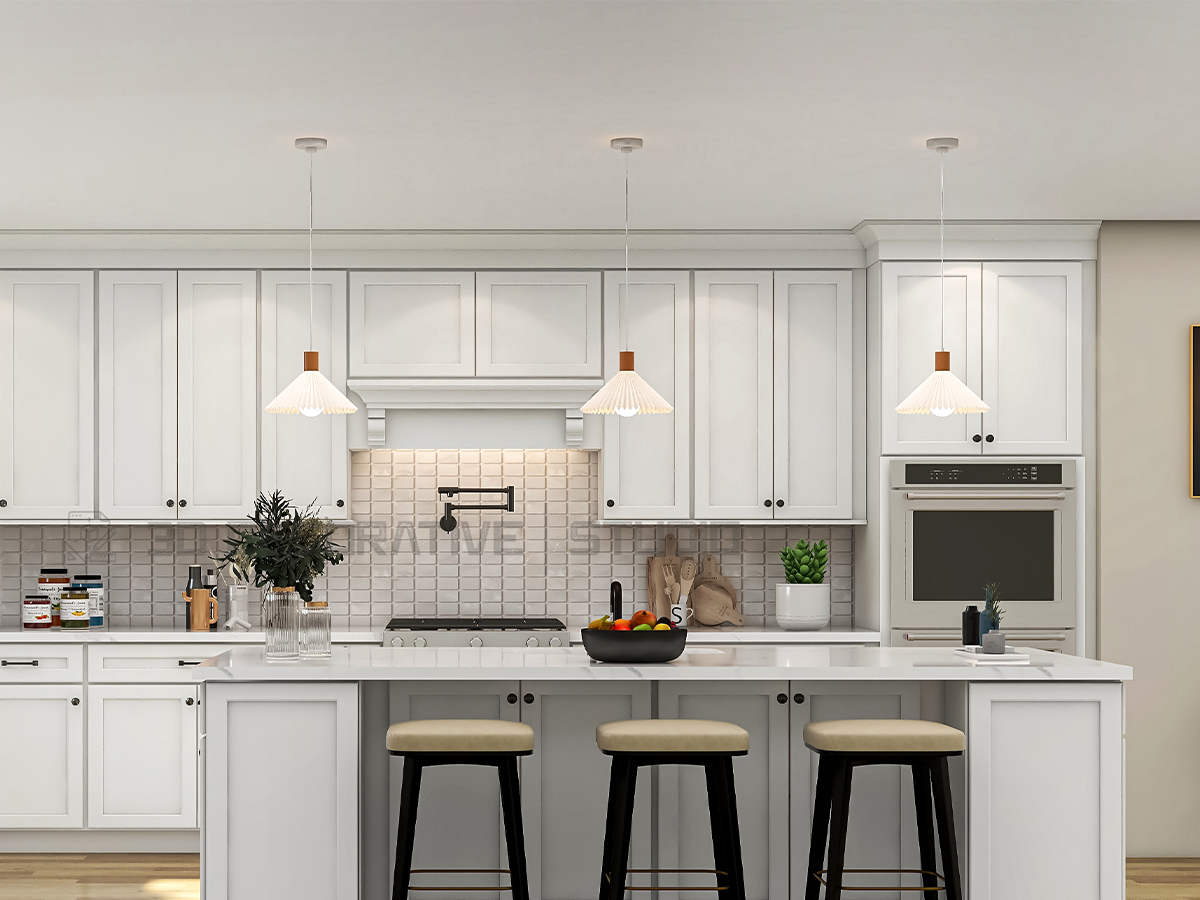
Proper kitchen lighting enhances functionality and aesthetics. In this article, we’ll explore six crucial factors to consider for effective kitchen lighting.
6 Factors for Kitchen Lighting
1. Purpose and Functionality
The first step in planning your kitchen lighting is to identify the different activities that will take place in the space. Will you be cooking, dining, or entertaining? Each activity requires a different type of lighting to ensure optimal visibility and comfort.
Task Lighting: This type of lighting focuses on specific work areas such as countertops, stovetops, and sinks. Under-cabinet lights, pendant lights, and recessed lights are popular choices for task lighting as they provide direct and focused illumination where it’s needed most.
Ambient Lighting: Ambient or general lighting serves as the overall illumination for the kitchen. Ceiling lights, chandeliers, and track lighting can be used to evenly distribute light throughout the space, creating a warm and inviting atmosphere.
Accent Lighting: Accent lighting is used to highlight architectural features, artwork, or decorative elements in the kitchen. Wall sconces, spotlights, and strip lights are excellent options for accentuating specific areas and adding visual interest to your kitchen design.
2. Layered Lighting
One of the most effective ways to create a well-lit and visually appealing kitchen is to use a layered lighting approach. By combining different types of lighting, you can achieve a balance between functionality and aesthetics.
Combining Task and Ambient Lighting: Pairing task lighting with ambient lighting allows you to create a versatile lighting scheme that caters to both cooking and dining activities. For example, you can install recessed lights for general illumination and add under-cabinet lights for task-specific tasks like food preparation.
Adding Accent Lighting: To enhance the overall design of your kitchen, consider incorporating accent lighting into the mix. This can be achieved by installing pendant lights over an island or using wall sconces to highlight a decorative backsplash.
3. Lighting Fixtures and Styles
The style and design of your lighting fixtures can significantly impact the overall look and feel of your kitchen. When choosing fixtures, consider the existing décor, architectural features, and personal preferences.
Traditional Styles: Chandeliers, lanterns, and flush-mount fixtures are timeless options that complement traditional and classic kitchen designs.
Modern Styles: Sleek and minimalist fixtures, such as pendant lights with geometric shapes or linear chandeliers, work well in contemporary and modern kitchens.
Industrial Styles: For a rustic and industrial look, consider using fixtures with metal finishes, exposed bulbs, and vintage-inspired designs.
4. Lighting Controls and Dimmers
Having the ability to control the intensity and brightness of your kitchen lighting is essential for creating the right ambiance and conserving energy. Installing dimmer switches allows you to adjust the light levels according to the time of day, task at hand, or mood you want to create.
Smart Lighting Systems: For added convenience and flexibility, consider investing in a smart lighting system that allows you to control your kitchen lights remotely via a smartphone or voice commands.
5. Energy Efficiency
With rising energy costs and growing environmental concerns, opting for energy-efficient lighting solutions is not only beneficial for your wallet but also for the planet. LED lights are an excellent choice for kitchen lighting as they consume up to 75% less energy than traditional incandescent bulbs and last much longer.
LED Under-Cabinet Lights: Installing LED under-cabinet lights can significantly reduce energy consumption while providing ample task lighting for food preparation and cooking.
Energy Star-rated Fixtures: When shopping for lighting fixtures, look for Energy Star-rated products, which are certified to meet strict energy efficiency guidelines set by the U.S. Environmental Protection Agency.
6. Safety and Installation
Last but not least, safety should always be a priority when planning your kitchen lighting. Ensure that all fixtures are installed correctly and comply with local building codes and regulations.
Proper Placement: When installing overhead lighting, make sure that fixtures are positioned at a safe distance from flammable materials and that cords and wires are securely concealed to prevent tripping hazards.
Water-resistant Fixtures: Given that kitchens are high-moisture areas, it’s essential to choose water-resistant lighting fixtures, especially for areas near sinks and stovetops.
Professional Installation: If you’re not confident in your DIY skills, it’s always best to hire a licensed electrician to install your kitchen lighting fixtures to ensure they are safe and properly connected.